This spring, a pair of Northern Flicker woodpeckers excavated a nesting cavity in a stump on my property and reared at least one baby. Here is an illustrated chronology of the process. Perhaps the most amazing part of the whole story is that the stump is not in an isolated location; rather, it’s just two steps away from the mailbox which is right beside the gravel street.
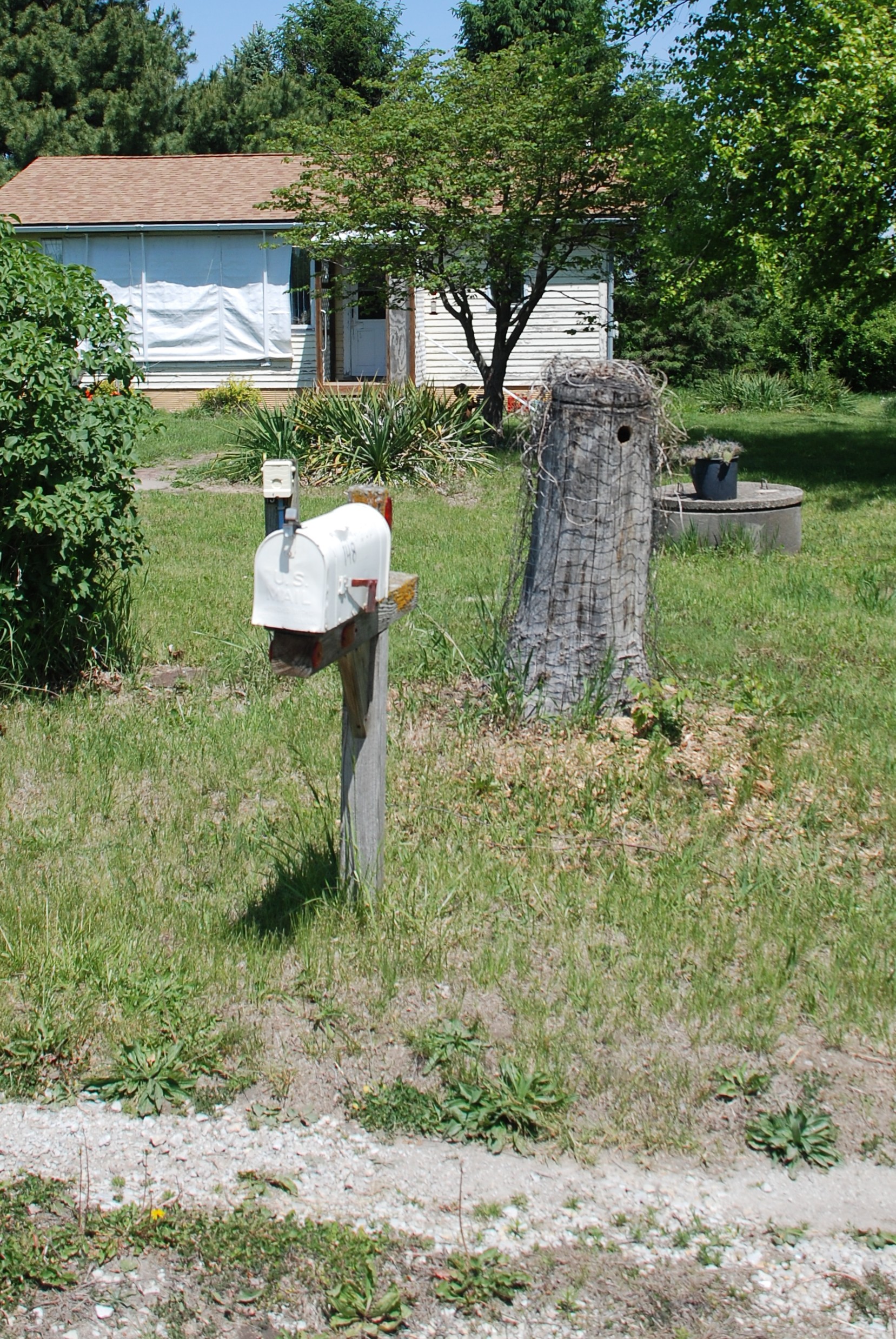
About the Stump
The stump is the remnant of a medium-sized silver maple tree that I cut down several years ago. I had to leave a tall stump because the growing tree had engulfed a steel fence post (under previous management). Later, I planted cinnamon vines at the base and wrapped the stump with rabbit wire to help the vines climb. You’ll notice the growth of those vines as the story progresses. Since the stump is very near the mailbox, I quickly got into the habit of bringing my camera and approaching quietly when I went to check for mail.
About Flickers
Northern Flickers are large woodpeckers, brown on the back, creamy white on the front, with speckles everywhere. Males and females have similar coloration, but the male has a black stripe extending back from the base of the beak. There are two sub-groups — red-shafted and yellow-shafted — named for the color on the underside of the wings and tail. Their nests are tree cavities that the birds excavate with their long, stout beaks. Many of these details are illustrated in the following photos. (See the All About Birds website for a wealth of information about flickers.)
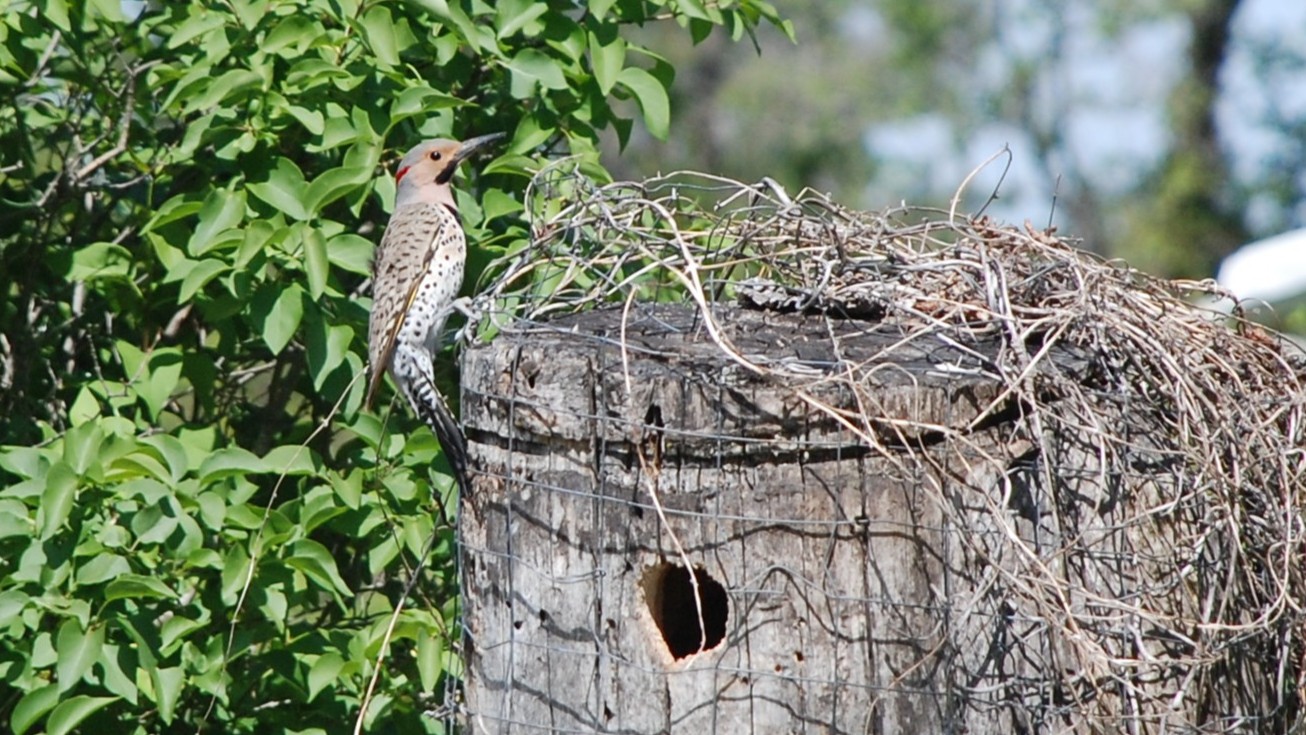
May 2
First sighting. I noticed an adult male flicker perched on the stump, and I could see that the pair had already made a lot of progress excavating the very soft silver maple wood.
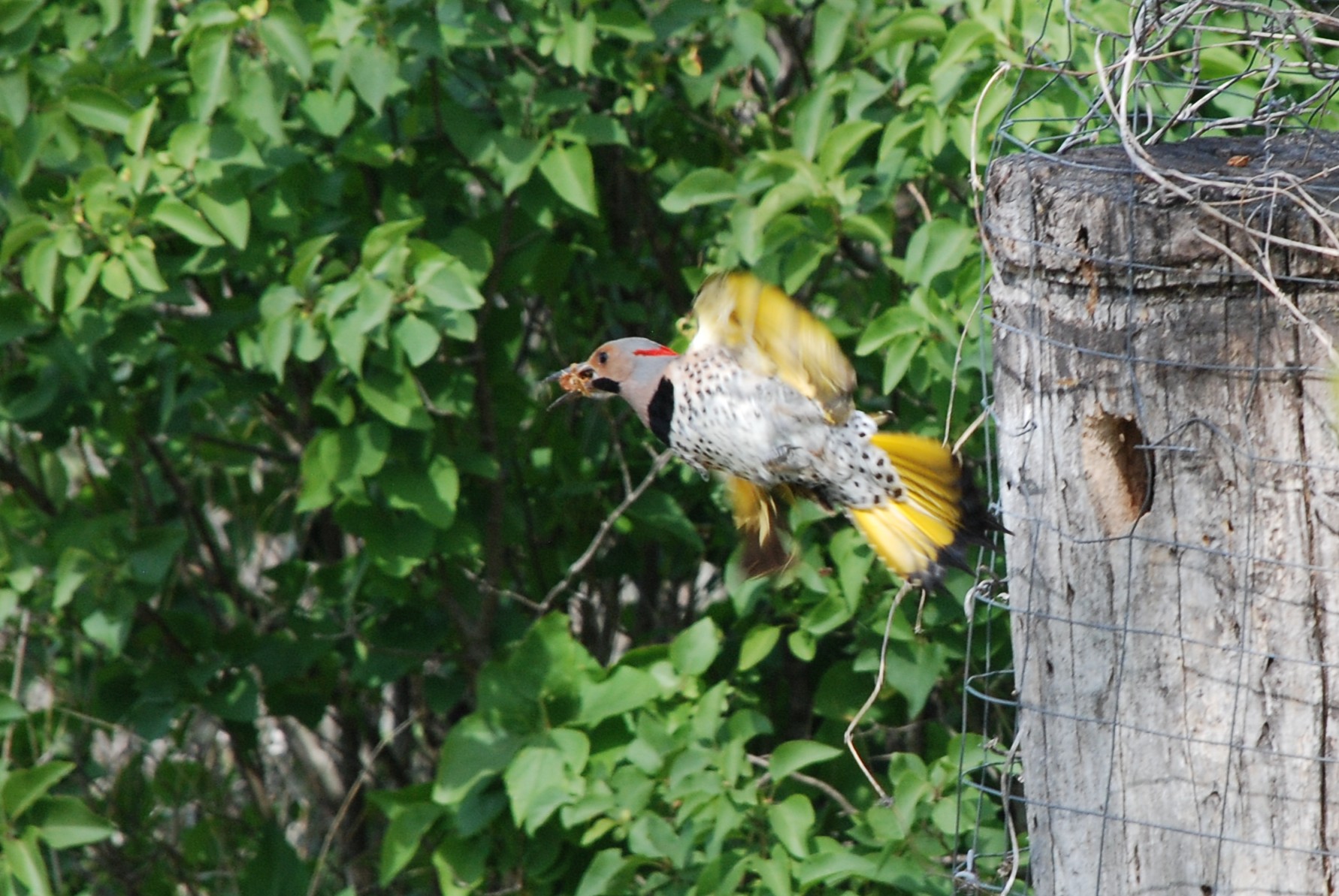
May 3
Excavation. The birds were hard at work, and I got a photo of the male leaving the cavity with a chunk of punky wood in its beak. In this photo it’s clear the these are Yellow-Shafted Northern Flickers.
May 4
More excavation. From the front steps at 8:00 a.m. I could hear “thunk, thunk, thunk” coming from the stump I quietly approached from behind and made this recording. As you will hear, mornings in early May are noisy around here.
May 10
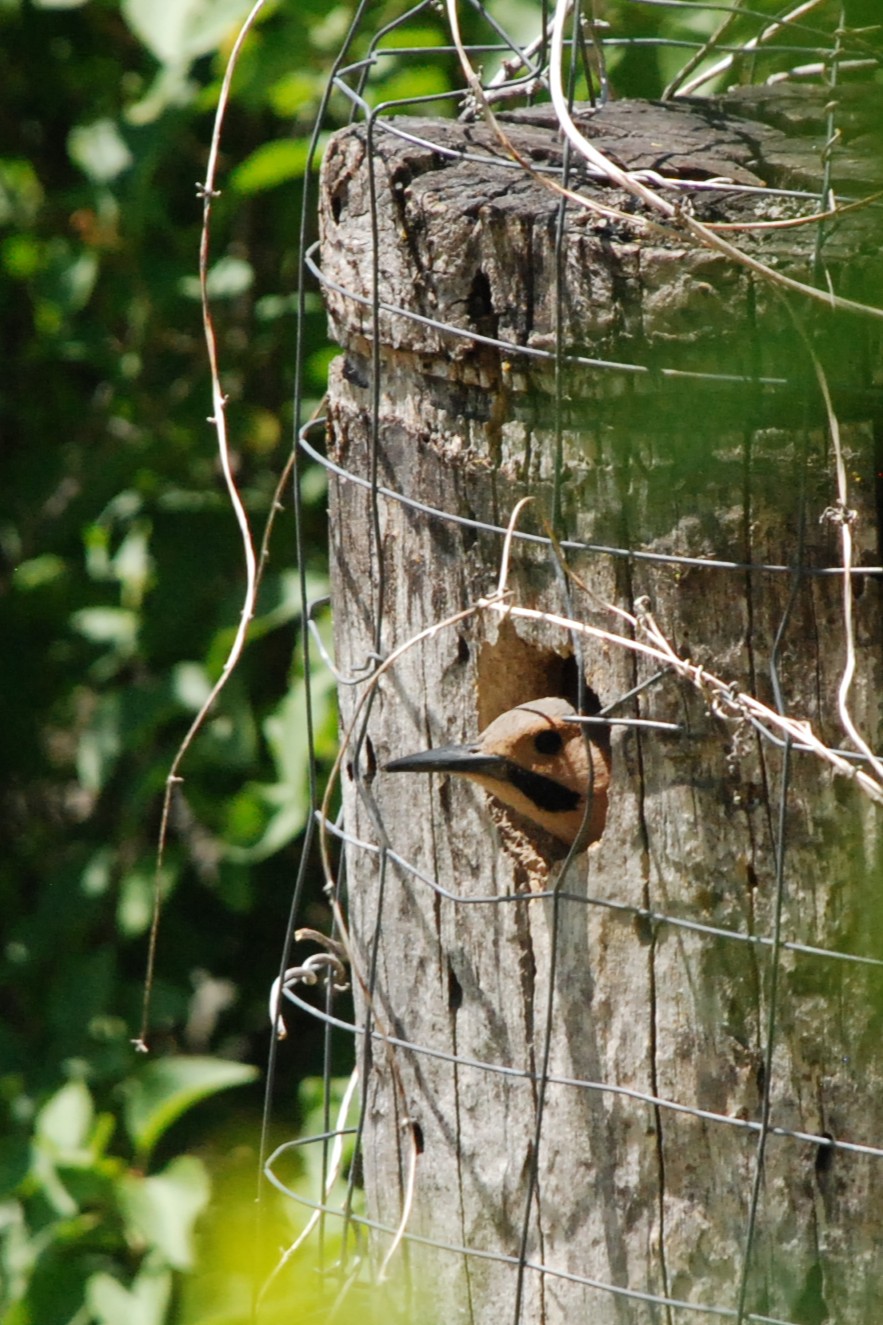
Incubation. By this date, excavation had ended and egg laying was probably finished, too. Time for incubation. The male and female take turns sitting on the eggs. Here, the male flicker is peering out of the opening.
May 12
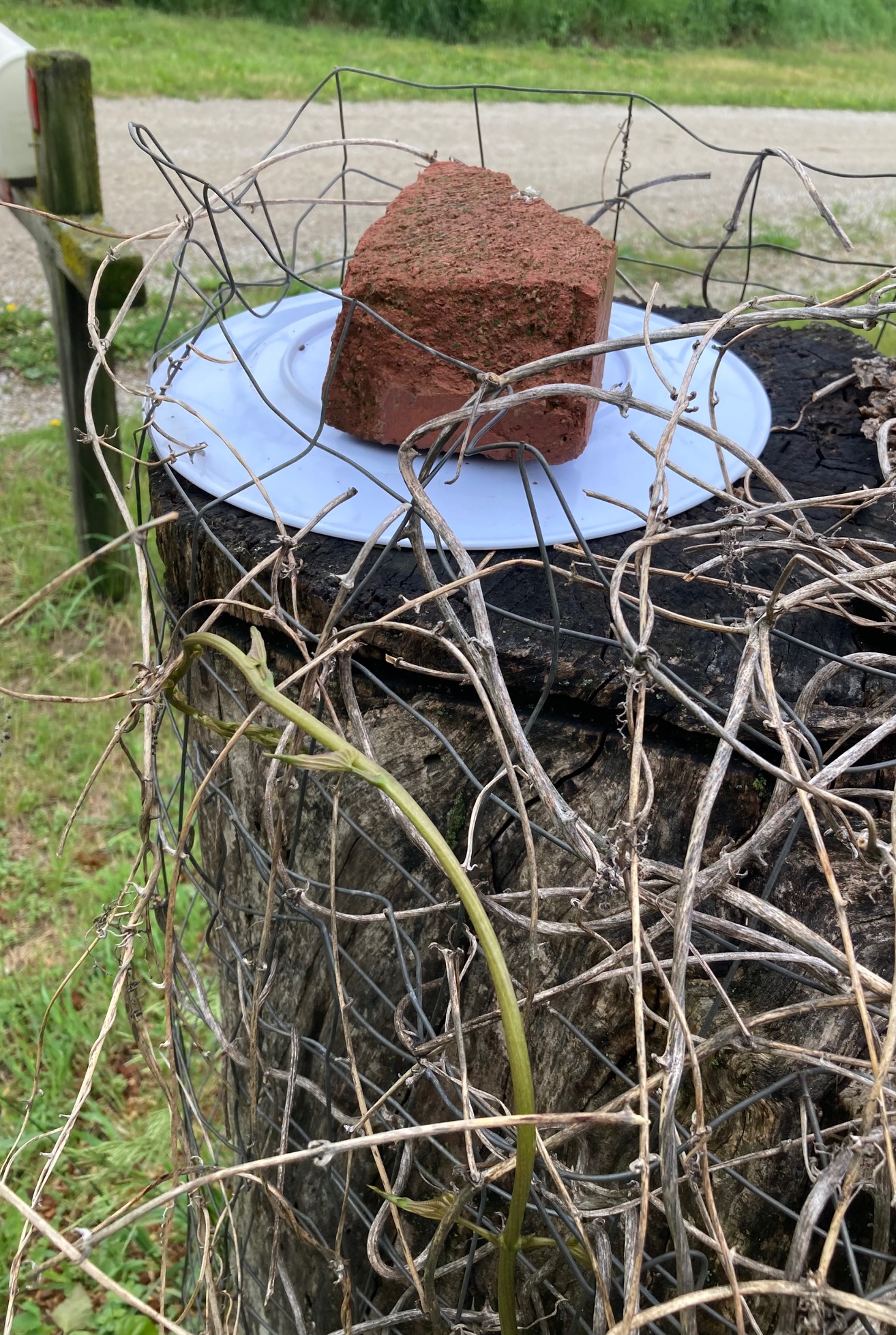
Repairs. On this date, while checking the mailbox, I noticed light inside the cavity. Turns out, a chunk of the “roof” had caved in, leaving a 2 by 3 inch (5 X 7.5 cm) opening in the top of the stump. With rain in the forecast, I undertook an emergency repair consisting of a plastic plate and a brick. A few days later, we had a fierce rainstorm followed by a month of rainy weather. Even if the cavity didn’t stay perfectly dry, at least there wasn’t a flood.
May 18
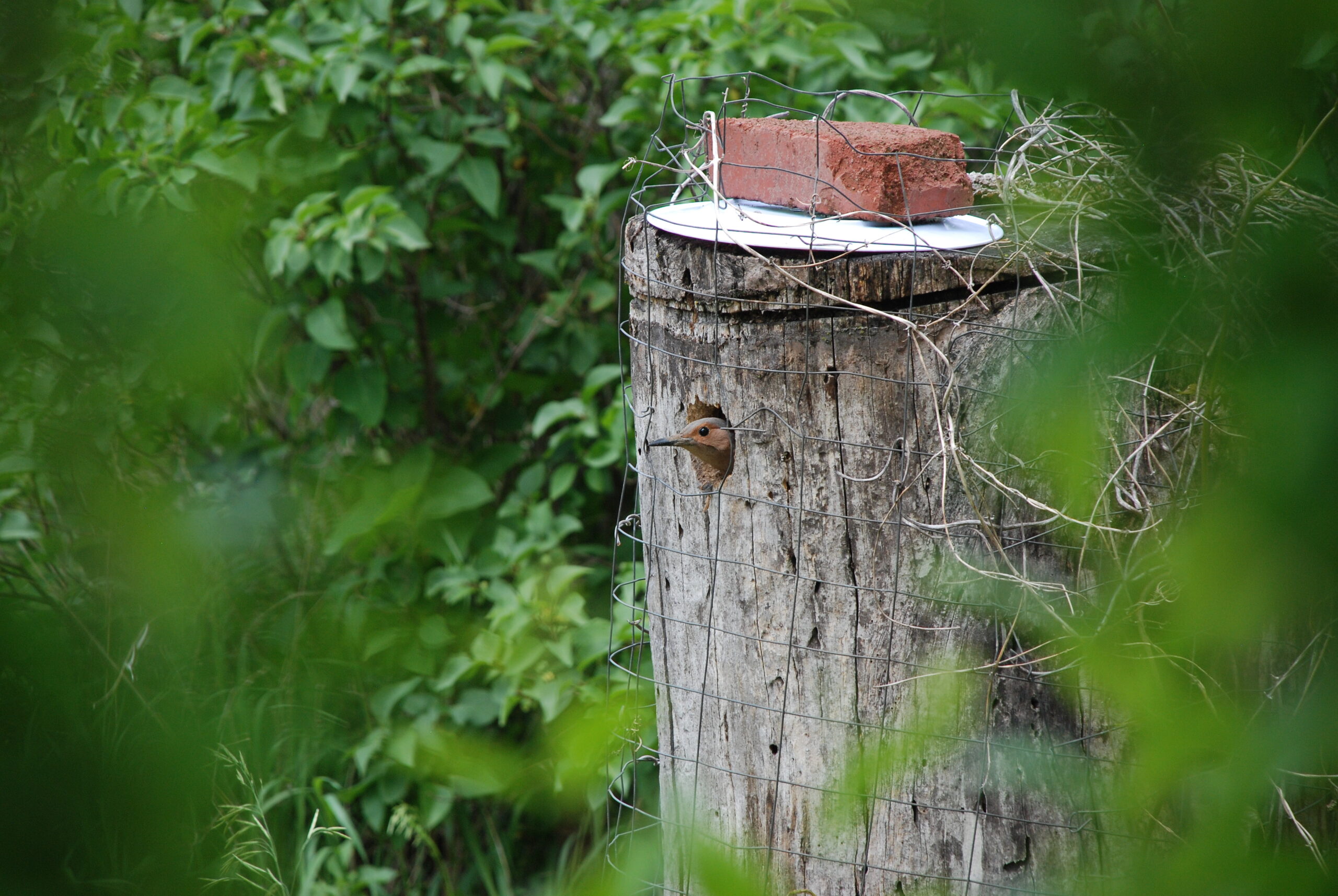
Continued incubation. Here, the female is looking out of the opening. The blurry green patches around the edges of the photo are the leaves of a bush that I was using as cover as I observed.
June 5
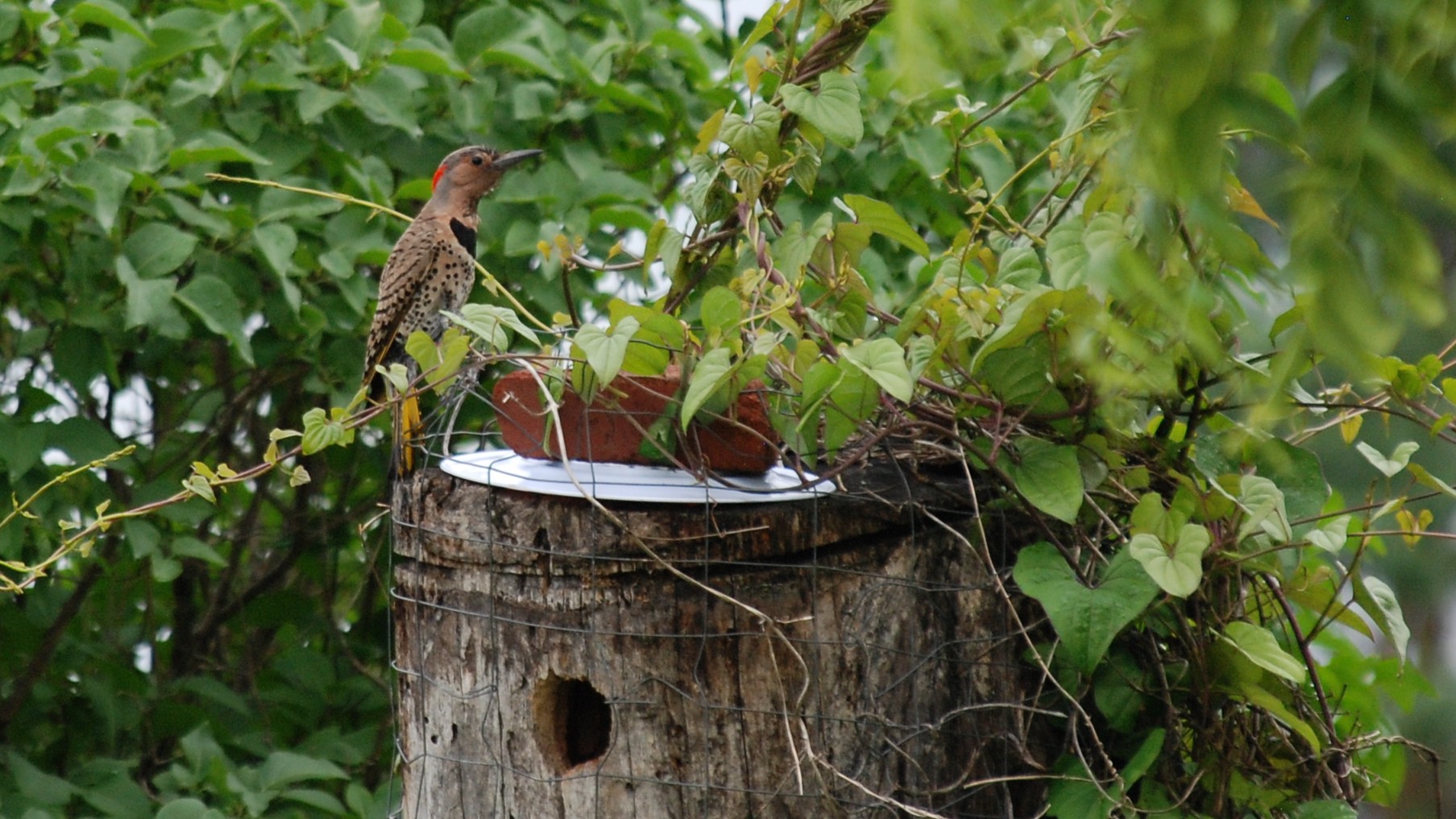
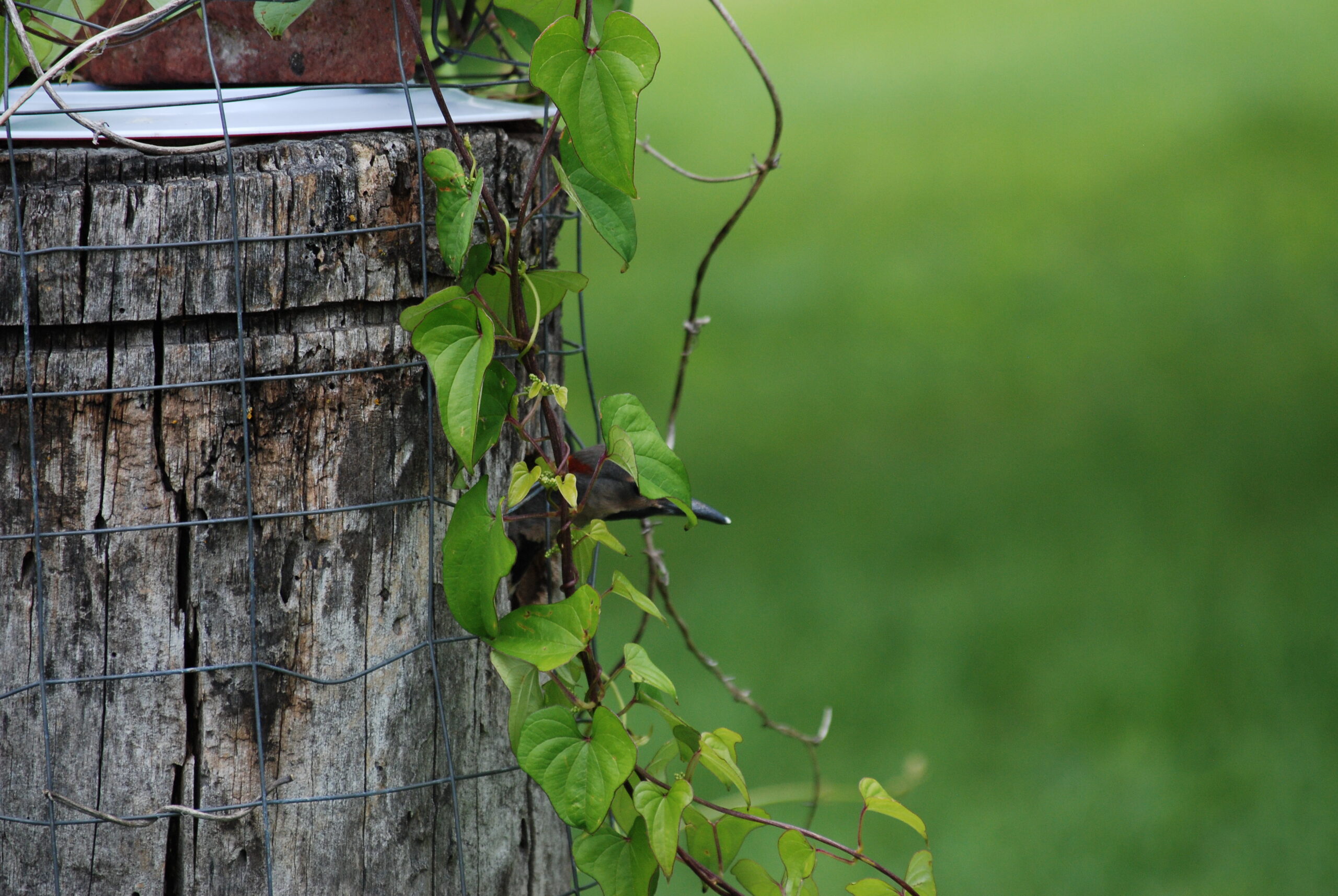
Parenting. By now, the egg(s) should have hatched, and the nestlings would be a couple of weeks old. In the photo, the female seems to be taking a break from parenting. The cinnamon vines have definitely grown.
June 8
Baby noises. I was out in the yard, probably 20 feet away from the stump, when I heard sounds coming from the stump. I quietly approached and made this recording:
June 11
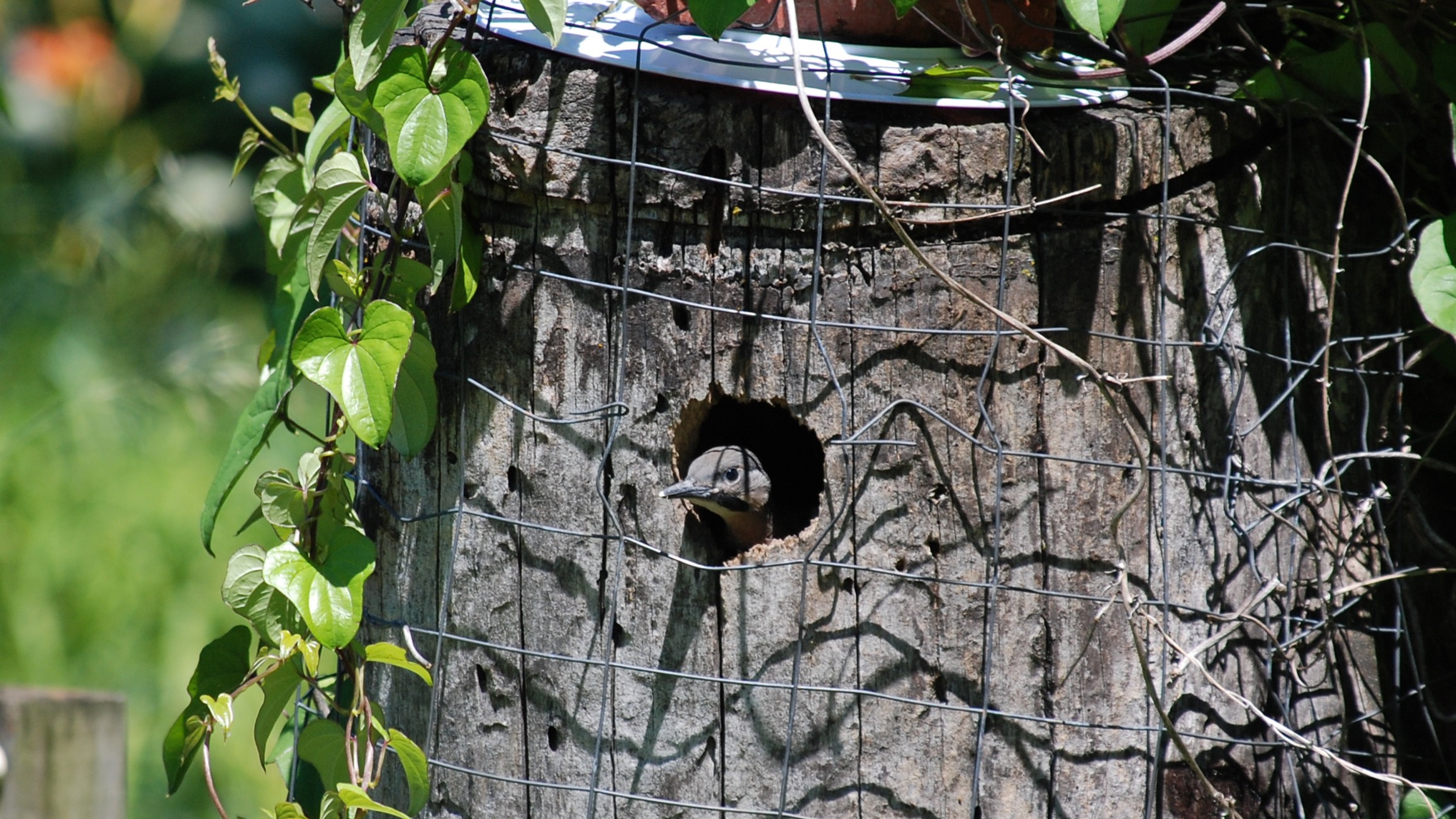
The new kid on the block. This is the first sighting of a young flicker, who might be 3 weeks old at this point.
June 14
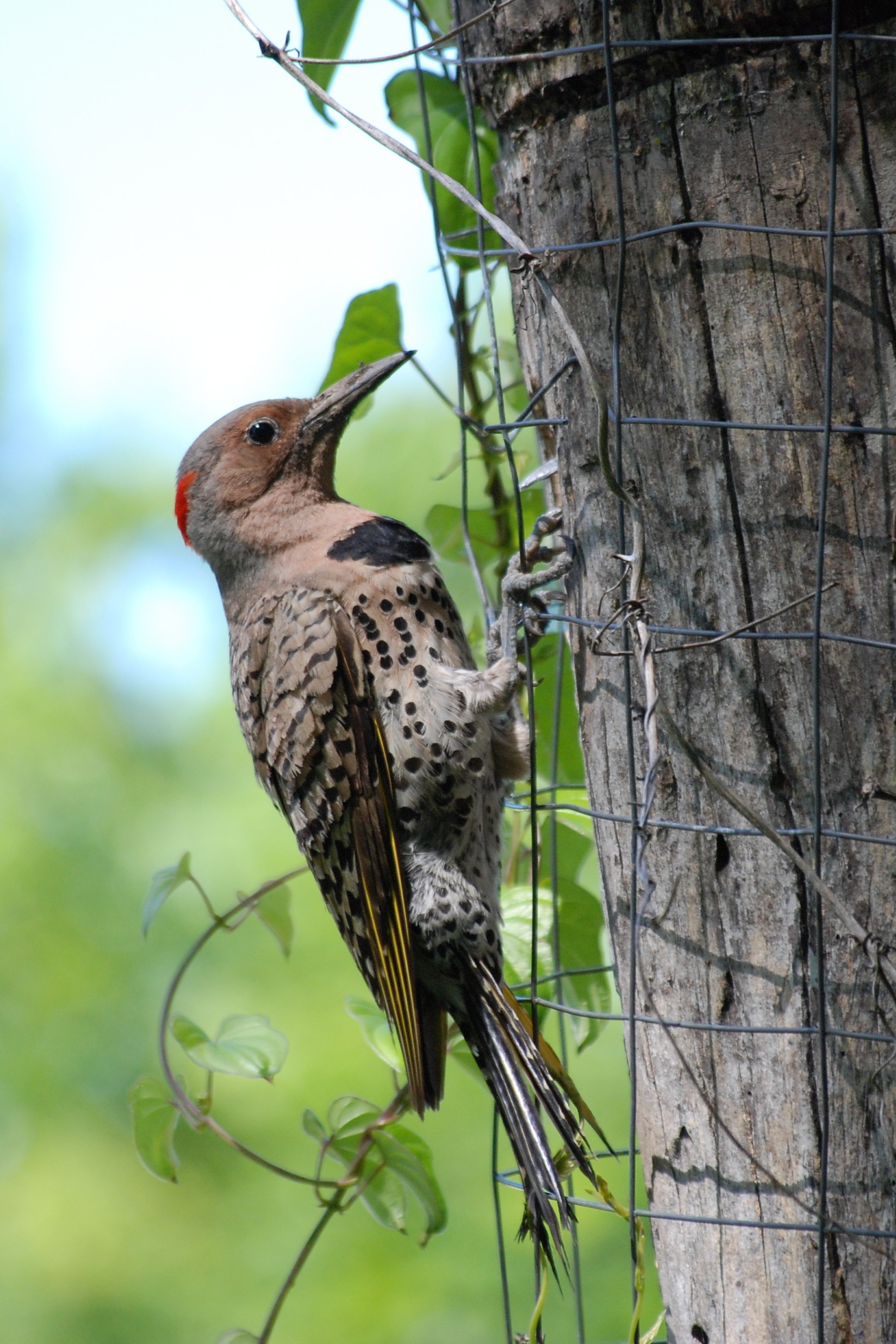
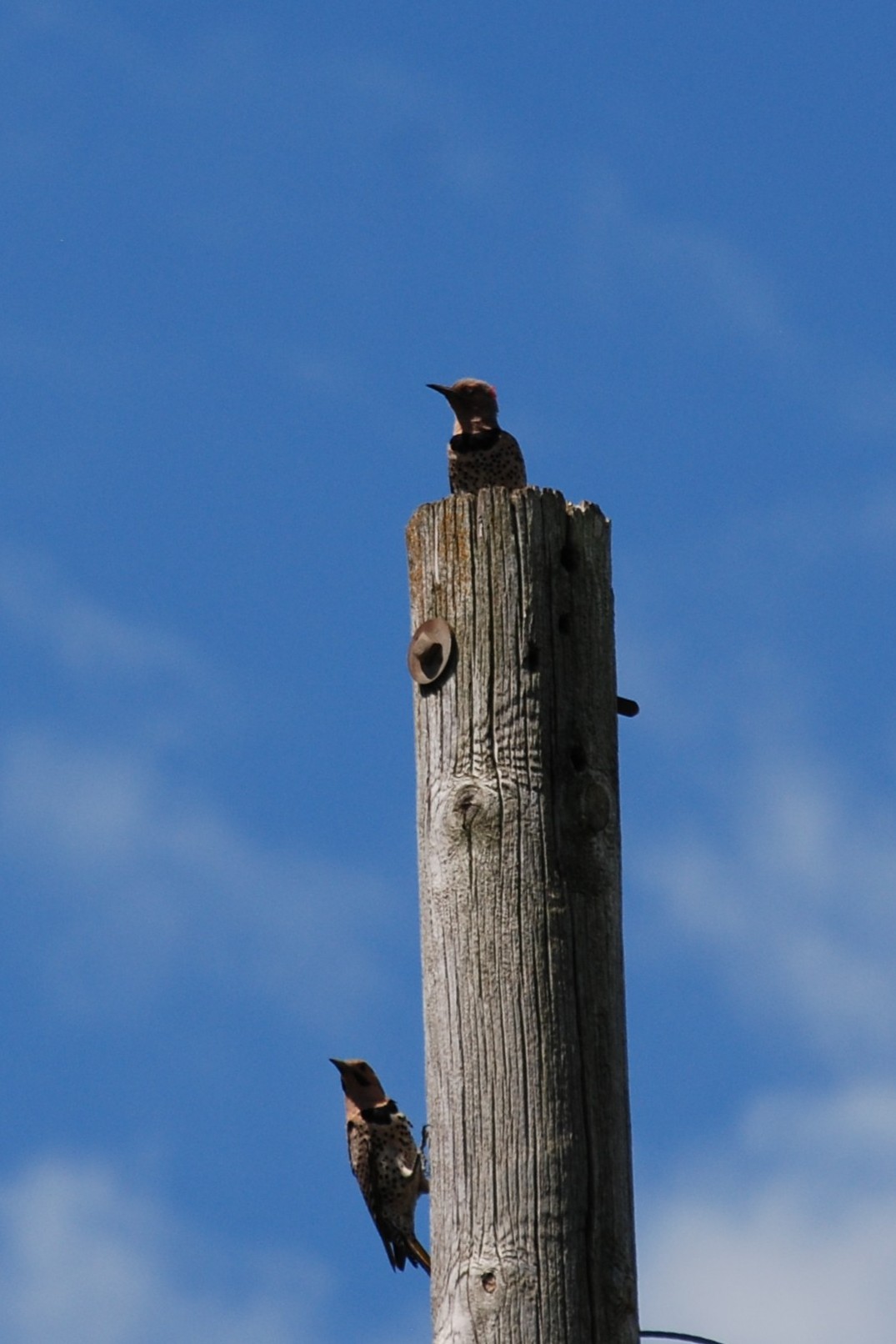
Busted! For several days, the adult flickers were constantly around, but they kept their distance. They would come by the nest to drop off food, but only stayed a second or two. I wanted to get a photo of the feeding, so I hid behind and beneath a shrub to stake out the scene. The female came by every few minutes, and I got one good photo. Soon, though, the mom ceased to come around and the youngster was waiting and calling from the opening. I looked up at the light pole across the street and realized that I had been found out. So, no more stake outs for me.
June 15
Communication. A week after the cute baby sounds, the youngster(s) had found their voice and were making a loud call “TIUU” to communicate with the parents, who were usually across the street on the light pole or in a tree. Here is an “audio postcard” with a field recording of the young flicker. The “Ta-ta-ta-ta-ta-ta-TA” call at about the 4 second mark is from one of the parents in a tree across the street.
June 16
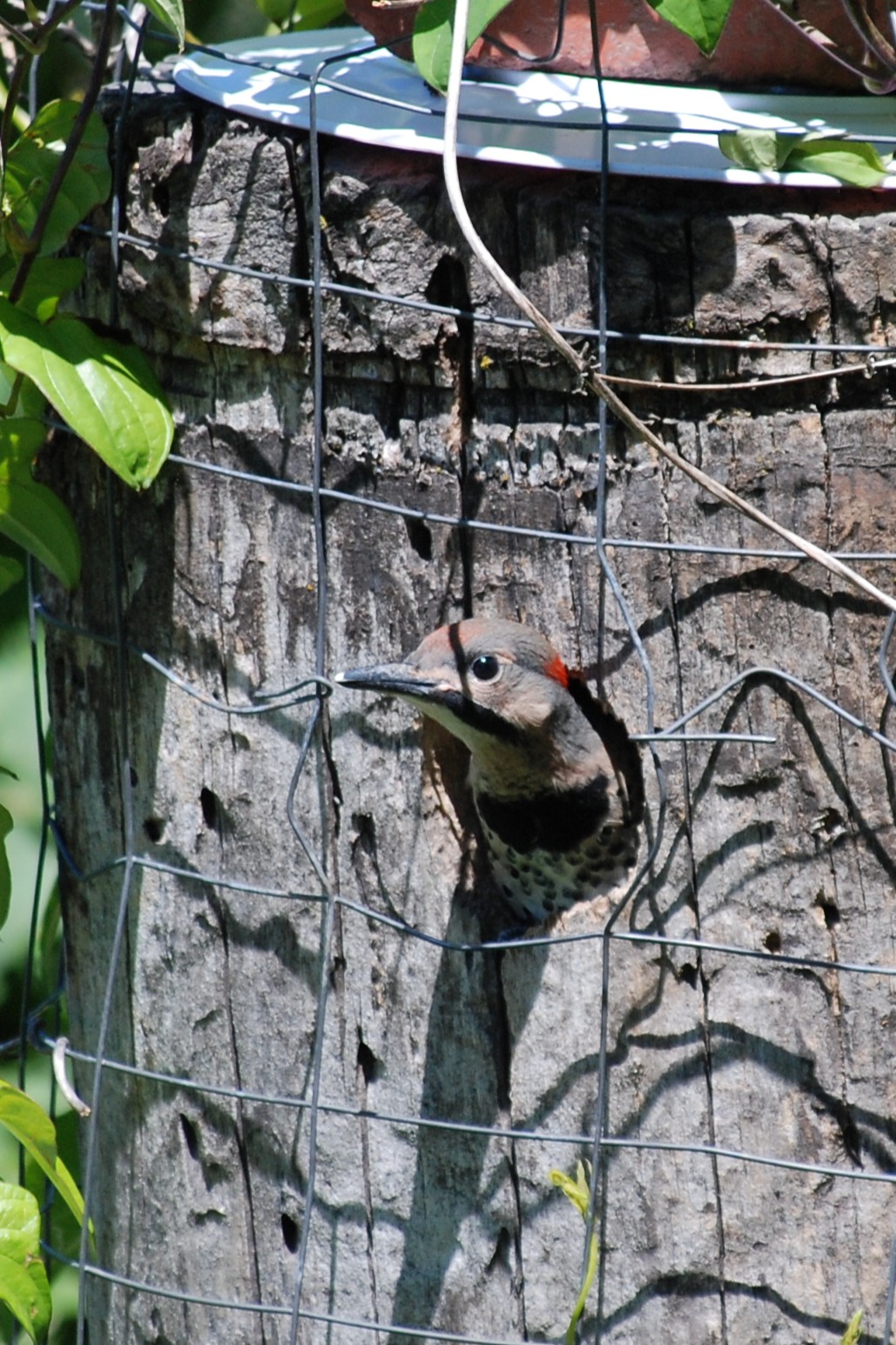
Growing up fast. I never saw more than one youngster at the opening, so maybe only one hatched or survived. In any case, by this date, the young flicker was leaning out more and more and had developed quite a bit of its adult plumage.
June 17
Gonna fly now. When I went to check for mail, camera in hand, the young flicker was leaning out from the opening. I got this photo before it ducked back inside. A couple of seconds later, it reappeared, leaned far out of the hole, and then just took off flying. It went to a brushy area some 30 yards away, and that was the end of the nesting season. I continued to hear the “TIUU” call over the next couple of days (and once I heard it from different directions — so maybe two babies?). In any case, I think the parents were probably still involved with the feeding and protection of the fledgling for a few more days.
Postscript
The whole process took about 6 weeks. The fledgling left the nest on June 17. Counting backwards from that date and using information from All About Birds, I produced this timeline that guided the chronology above.
May 1 — Excavating begins (this process went quickly in the very soft wood of the old stump)
May 6 — Egg laying (unknown amount of eggs, but 1 egg per day)
May 10 — Incubation begins
May 22 — Eggs hatch (after approximately 12 days of incubation)
June 17 — Fledgling leaves nesting cavity (approximately 26 days after hatching)
This recounting of events undoubtedly leaves out important details. There were big gaps in my observations, and there was no “nest cam” to provide information about how many eggs, how many hatched, nestling mortality, etc. Nevertheless, I know for sure that there is at least one more Northern Flicker around here.
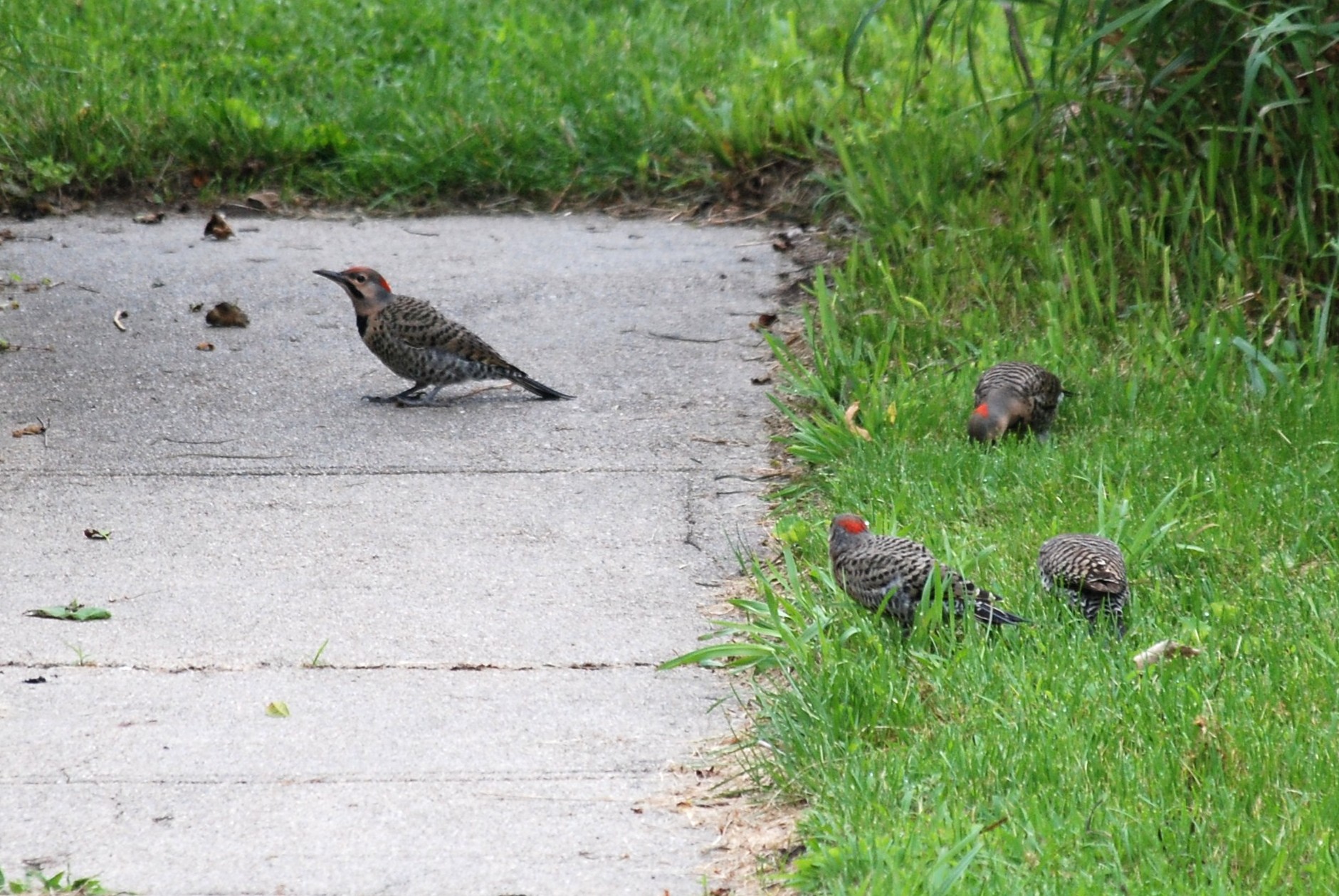
Addendum: June 27 (Further Flicker News)
In the days following the end of nesting, I continued to see flickers around the yard. This morning, I thought I heard the distinctive “TIUU” call that I associate with the youngster(s). Then, at around 11:00 a.m., I looked out the front door and — lo and behold! — there were four flickers at the end of the sidewalk. I am now sure that there were indeed two youngsters in the nest (even though I never saw more than one at a time).