
It wasn’t exactly our plan, but we got there. The photo shows it.
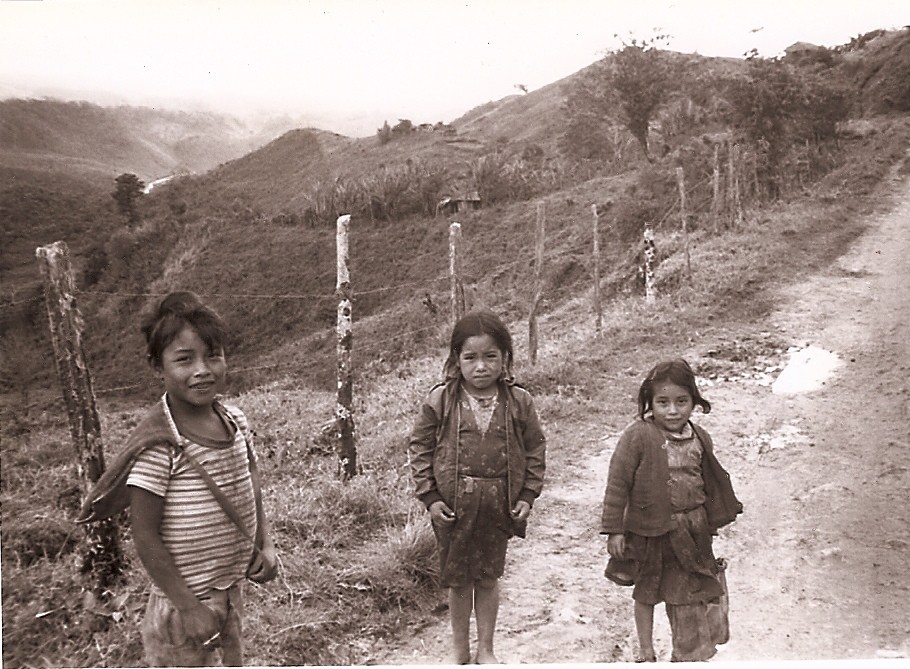
“There” was the Mexican side of the border with Guatemala, an area of hills, woods, and pastures and home to several camps (temporary villages) of refugees from Guatemala. For reference, see the zoomable map at the end of this post.
How We Got There
My friend Jon and I were on an extended tour of Mexico and had arrived in the popular and picturesque highland city of San Cristóbal, Chiapas. We happened into the bookshop of the Catholic Diocese, where we saw reminders of things that had been in the news: a poster with the modified tourist slogan: “Guatemala – Land of Eternal Springtime Repression;” a small weekly planner “Refugees in Chiapas;” and a booklet about refugees.
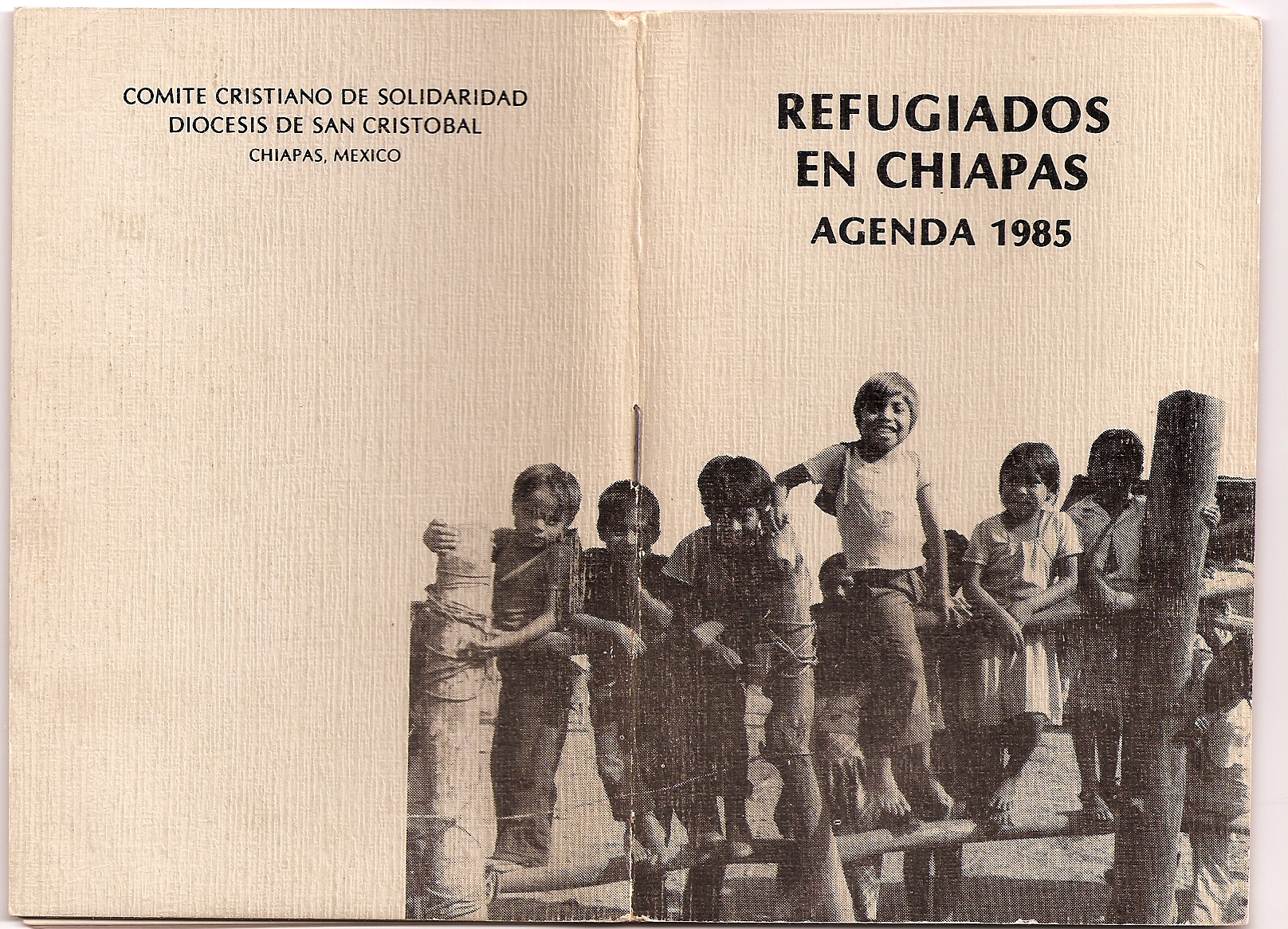
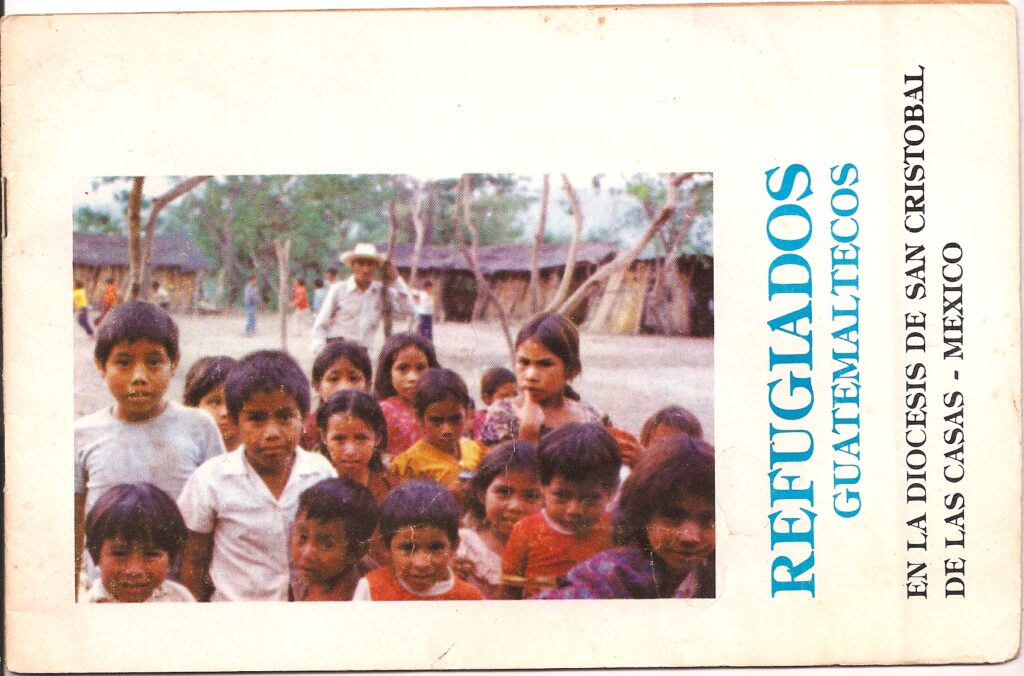
I talked with the bookstore clerk, and she asked if we would like to know more about the refugees. If so, we should go to the convent and ask for Sister Lucía. Looking back at my journal, I realize that it was Sister Lucía who provided the push that got us to the border:
Thursday, February 28
	I talked with Sister Lucía this morning.  She's with the Christian Committee of Solidarity, a group which helps Guatemalan refugees in Chiapas.   We talked for about an hour and a half, and she really encouraged me to go see some of the refugee camps.  She gave me some explicit directions and the names of people to ask for.  I talked with Jon and we decided to "go for it."
Following Sister Lucía’s directions, we took the bus to the small city of Comitán and got a hotel. The next morning we headed for Tziscao, a village on the Guatemalan border. Again, from my journal:
Saturday, March 2
	Got up at 6:10.  Heading for the town of Tziscao by 7:45 a.m.  Arrived at 9:00 and talked with the priest, Padre Alfredo.  He repeated the things Sister Lucía said on Thursday.  He told us how to get to the various camps.  He said that a year ago there were checkpoints so that a person couldn't go, but now only spot checks by Immigration.  He said, though, that he couldn't take us because if we did encounter the Migra, there would be problems.
	We decided to hike the 7 kilometers to the camp.  The hike was very beautiful -- through the jungly forest.
We walked along a wide gravel road that was almost right on the international border until we found the turn-offs for the camps.
My notes cover two camps, Cascadas and Yalambojoch, but the second one has stuck most in my memory. We encountered the three children as we climbed the slope on a side road. When we arrived at the camp, we were taken to the most substantial building; it had walls made of wooden poles, but also had a concrete floor. The building filled up with village men, and we were spoken to by a village leader. Children peered in through the gaps in the walls.
I was able to explain how we got there, mentioning Sister Lucía and Father Alfredo. Then they told us their story. Again from my notes:
Campamento Yalambojoch -   talked with catechist
Came July 1982
3 days traveling in rain
Came mostly as a group
720 in camp
220 kids going to school
Have a dining room for kids
They saw some of the violence -- saw people killed
Men have little work
Some women embroider with material supplied by the church
Food and clothes in short supply
Government agency, COMAR, provides items grudgingly
Men must go to Comitán to request stuff
Camp has same name as the town where the people come from
At home there weren't lights, cars, highways, etc.
Don't want to go to Campeche
--Don't want the "good stuff" offered
--Threats of violence don't scare them.
(Note: The violence that was mentioned happened in the village of San Francisco where the Guatemalan Military murdered 300 villagers in 1982 (Finca San Francisco Massacre). The Mexican state of Campeche was mentioned because the Mexican Government wanted to move the camps there, far away from the border. The government was using strong-arm tactics, but the people did not want to go.)
After seeing the camps, we hiked back to Tziscao and stayed the night in a simple hostel for tourists at the Lagunas de Montebello National Park. From there, we made our way back to San Cristóbal and, eventually, back home.
The Journal Itself
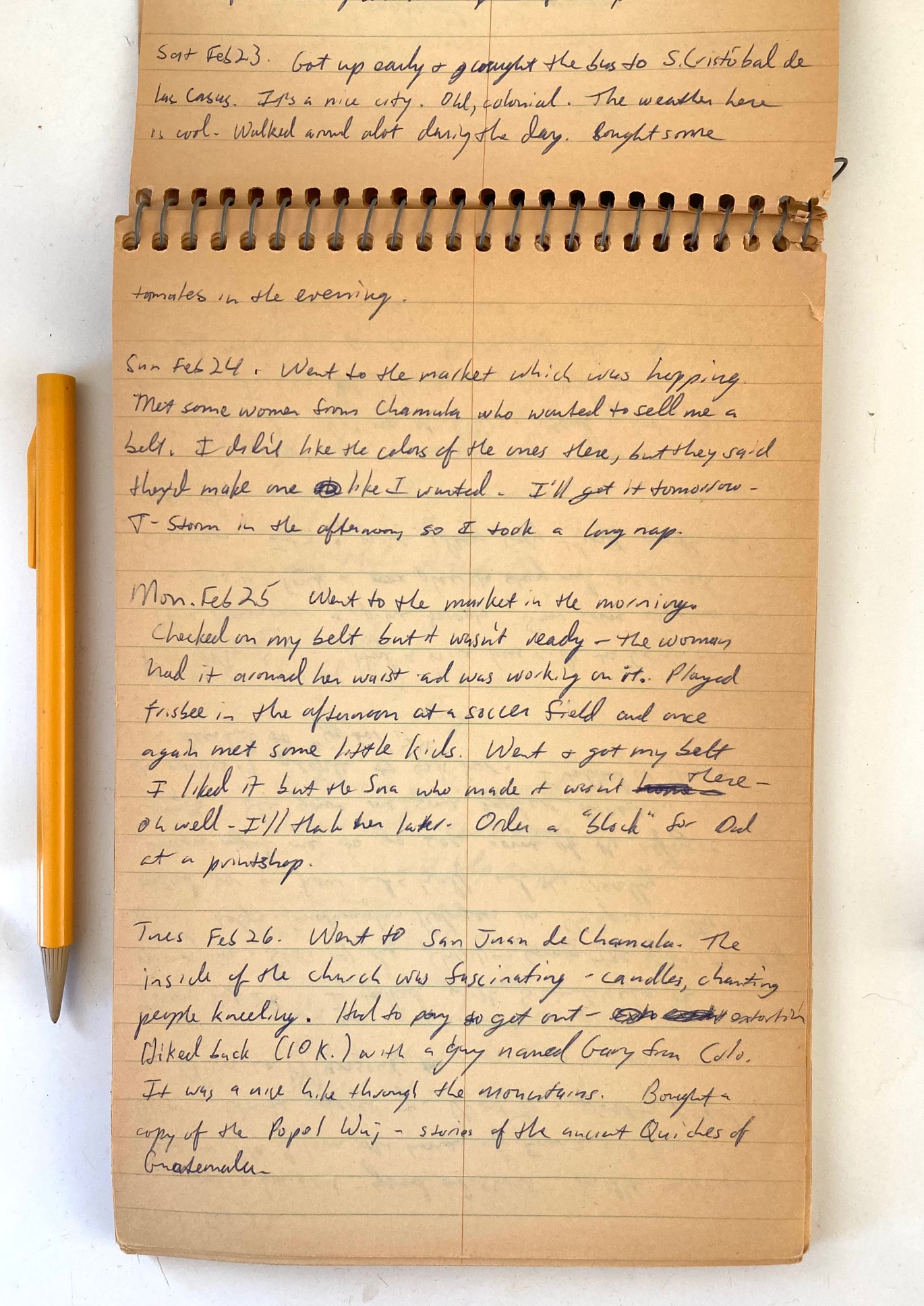
In 2013, I made a pdf version of my Journal. The pages that have to do with this adventure (and the sudden, unexpected return home) are available here (starting with the February 23 entry). The lefthand column has the journal entries (typed), and the righthand column has supplementary material.
I feel very fortunate that I thought to keep a journal and that I still have it all these years later.
Map
On this map, I’ve marked some of the key locations.