
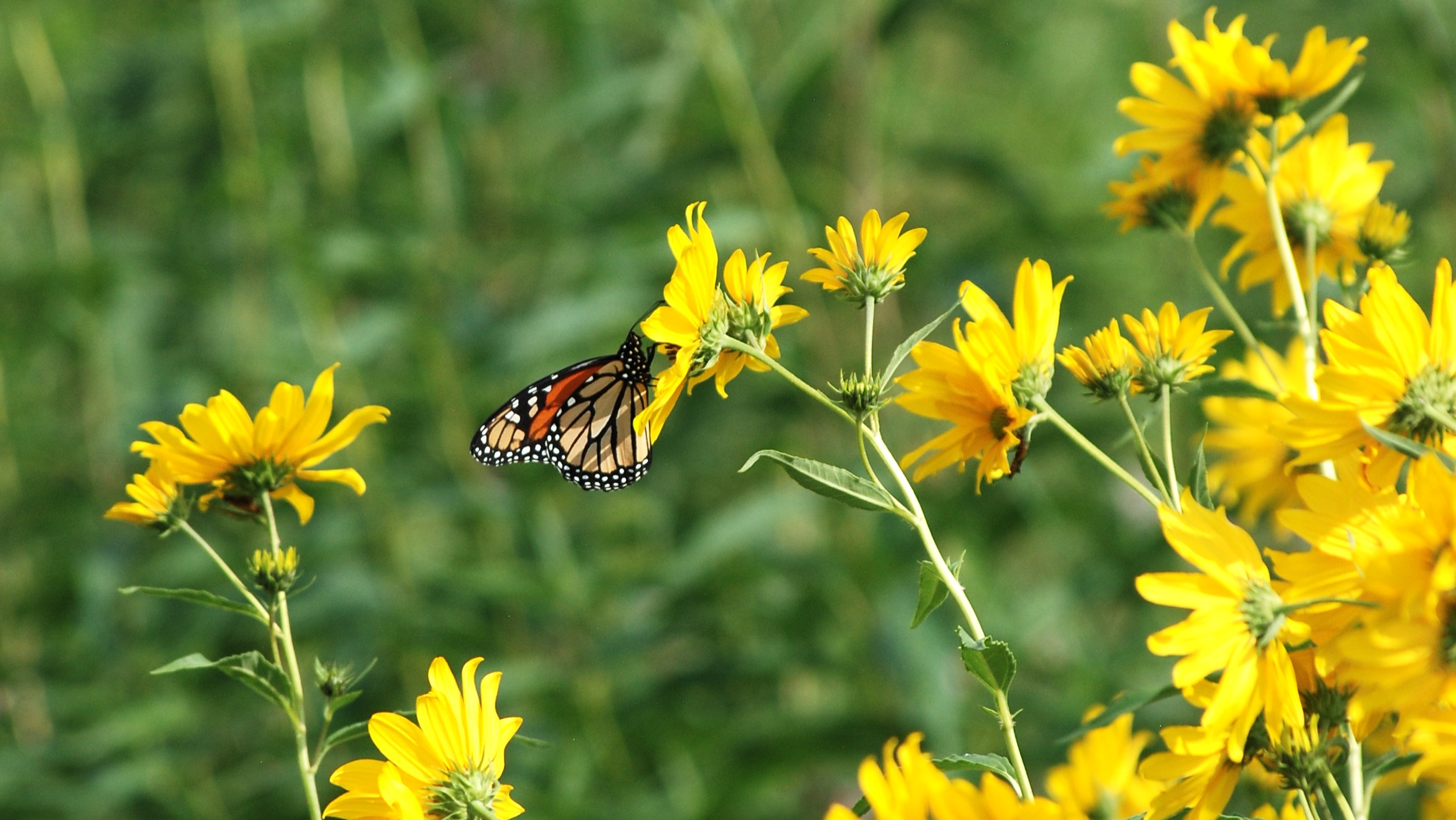
The monarch butterflies seemed few and far between during most of the summer. By August, though, I started to see a few more, which to me indicates that the local monarchs had been reproducing successfully during the summer. By early September, the numbers had swelled. There were still some local pairs breeding, but I’m sure that some of the butterflies were from farther north and were already migrating toward Mexico. By the last week of September, the number or butterflies had begun to diminish.
“Most monarch butterflies that emerge after about mid August in the eastern U.S. enter reproductive diapause (do not reproduce) and begin to migrate south in search of the overwintering grounds where they have never been before. From across the eastern U.S. and southern Canada, monarchs funnel toward Mexico. Along the way, they find refuge in stopover sites with abundant nectar sources and shelter from harsh weather.” MonarchJointVenture.org
My little farm is probably a good “stopover site.” The fence rows and wooded areas provide shelter from stormy weather. And nectar is plentiful. The hayfields have regrown and now offer red clover and sawtooth sunflowers in abundance. Goldenrod blooms along fences and in odd corners. My yard and garden do their part, too, with various fall flowers including five large clumps of Mexican Sunflowers (Tithonia) providing food for many butterflies.
I’ve put together a gallery of those late season monarchs — including one late season caterpillar.
(Click on the first photo to enter the gallery.)
I sure hope these migrating monarchs have been eating well and building strength while they’re here. They’ve got a long trip ahead!
Map: The Journey from SW Iowa to Central Mexico
From my house to the overwintering sites in Mexico is a distance of 1750 miles / 2800 kilometers. To get to there, the monarch butterflies at the farm will likely follow a route similar to the one described and pictured below.
From Iowa, the butterflies will head generally south-southwest, crossing parts of Missouri, Kansas, and Oklahoma. By the time they reach Texas, their flight path will have merged with the paths of butterflies from southern Canada and the central and eastern US. Those merged paths form a flyway that crosses Texas and continues into Mexico, where it follows a southerly route parallel to the Sierra Madre Oriental mountain range. Sometime around November 1st, the butterflies will begin to arrive at their overwintering sites within the Monarch Butterfly Biosphere Reserve.
On the map, the possible flight path is marked with a black line, the flyway with orange shading, and the Biosphere Reserve with blue shading. Even though the area of the Reserve might seem large (140,000 acres / 56,000 hectares), you’ll have to zoom way in to see the shading on the map. The actual overwintering sites are incredibly tiny — in total measuring around 5 acres / 2 hectares.
Note: This is a likely route for the monarch butterflies in my photos. However, if they happen to get blown off course by storms, they might end up on a different route, even one that follows the Gulf of Mexico coastal plain. Circumstances may change their path, but their goal will stay the same.
Note: Mexican Sunflowers (Tithonia)
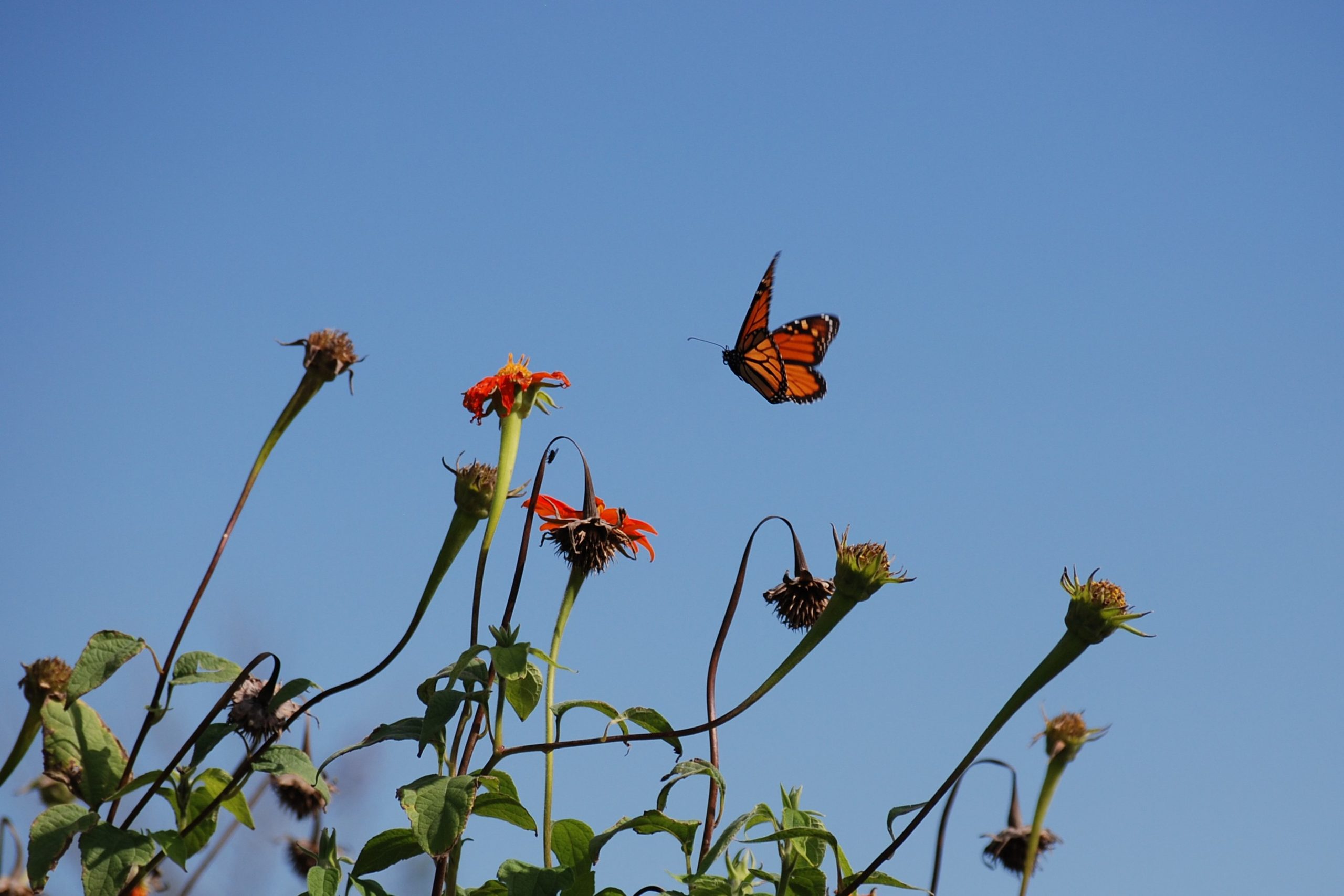
Several photos in the gallery as well as the closing photo below show the butterflies with Mexican Sunflowers (Tithonia rotundifolia var. “Torch”). These flowers are excellent for attracting butterflies and hummingbirds. From small transplants in May, they can grow to be tall (6 feet / 1.8 meter) bushy plants by August, producing flowers from mid-July until frost. For more photos of Mexican Sunflowers, see these previous blogposts: Butterflies and Sunflowers and Hummingbirds and Sunflowers.
Monarch Resources Consulted:
Monarch Joint Venture (A Collection of Resources)
Texas Fall Monarch Flyway Analysis
U.S. Forest Service: Monarch Butterfly Migration
Coahuila, a part of the monarch butterfly migration puzzle (Spanish language resource from the Mexican State of Coahuila)
UNESCO: Monarch Butterfly Biosphere Reserve
Thanks for planting such a refuge and stopover for monarchs. It works! And it is beautiful!