
In 2014, I was teaching at a school in Guatemala, and I had a few days free for Holy Week. I headed north with the idea of retracing my steps from almost 30 years before when a friend and I had visited some camps (temporary villages) of Guatemalan refugees. See my post Refugees, 1985, which sets the stage for this post.
Part 1: Revisiting the Camps
Just as in 1985, the base of operations was Comitán, a small Mexican city 30 miles (50 km) from the border. From there, I took a day-trip to Tziscao, right on the border. I had planned to immediately start out hiking toward the (former) camps. (See marked map below for locations mentioned in this post.)
An unexpected invitation, however, led to a 2-hour delay. On the micro-bus going to Tziscao, everyone was wanting to know (in a friendly way) where I was from. A young man invited me to visit his family on the Guatemala side of the border. One lesson I’ve learned in traveling is that opportunities appear out of nowhere, so be ready! I accepted, and on foot we crossed the border (me without my passport) to the village on the other side: El Quetzal.
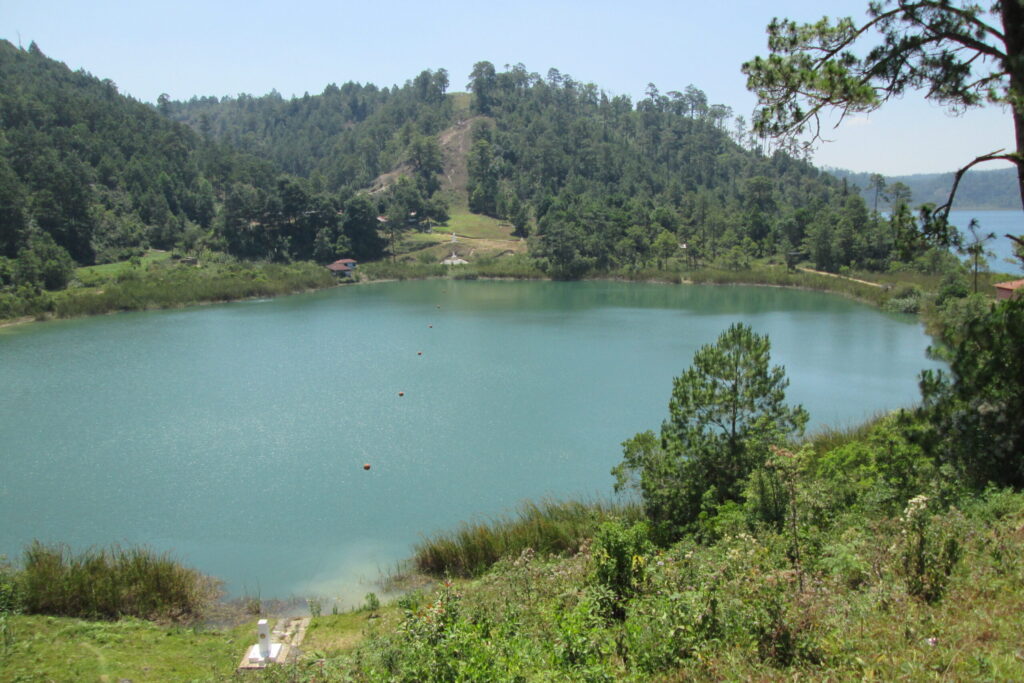
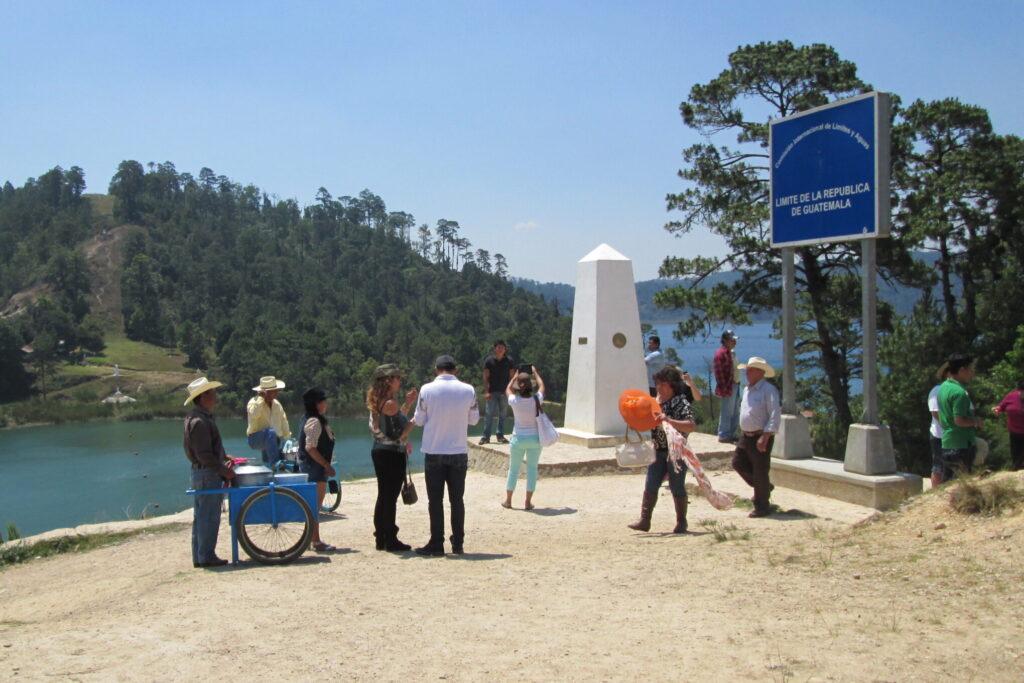
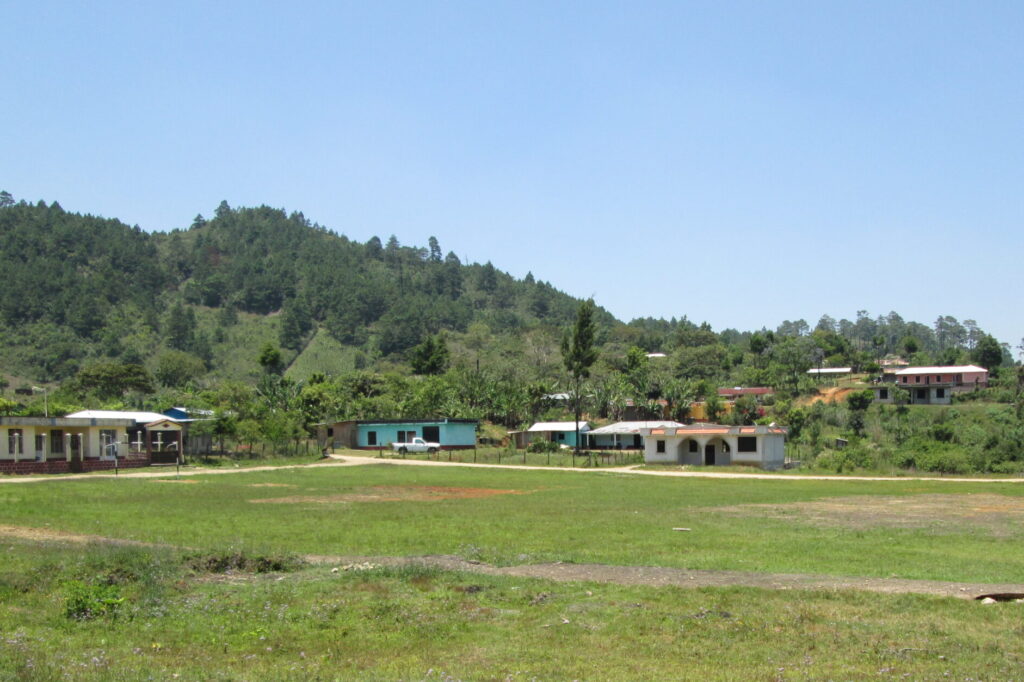
After meeting the family and having a snack with them, I headed back to the Mexico side to continue my mission. I started out walking and, honestly, nothing seemed very familiar. One big change from 1985 is that the wide road heading east from Tziscao is now paved. A billboard advertised the Cascada (waterfall), which had been the name of one refugee camp. The small settlement of Cuauhtémoc, somewhat off the main road, seemed to be the site of the former Yalambojoch camp.
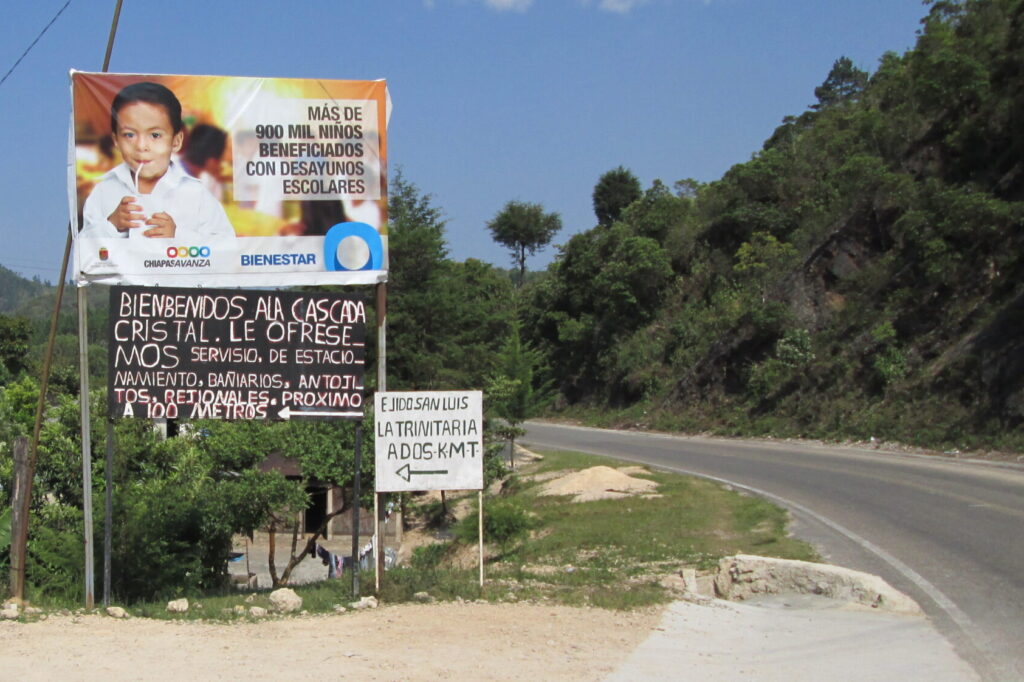
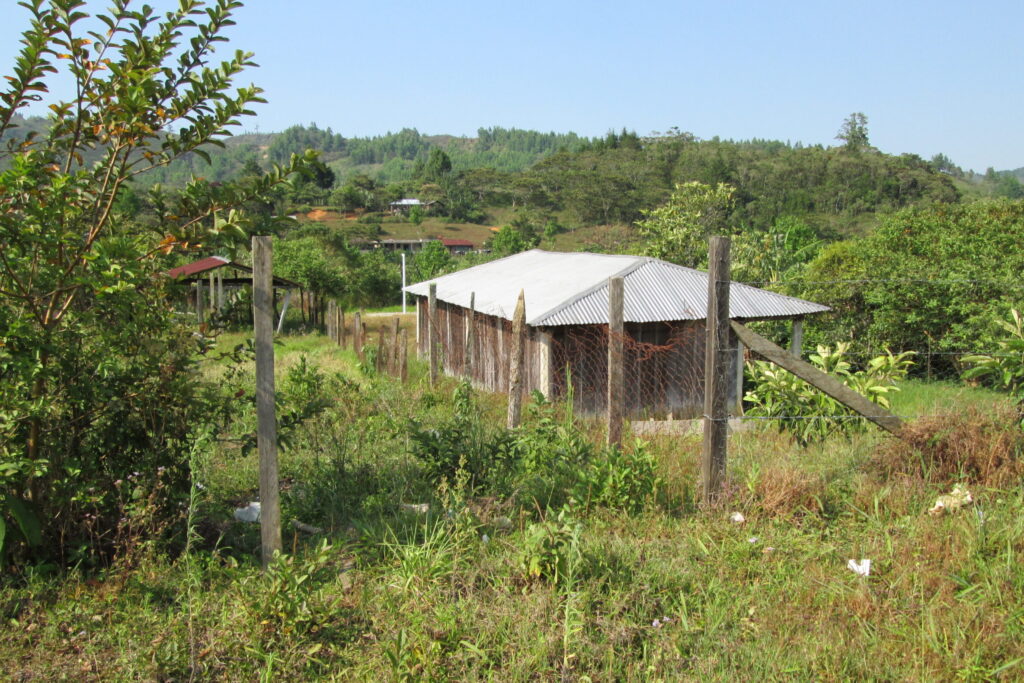
Part 1 of my journey left me feeling a little confused as I returned to Comitán for the night. It was hard to coordinate what I remembered with what I was seeing.
Part 2: Yalambojoch, Guatemala
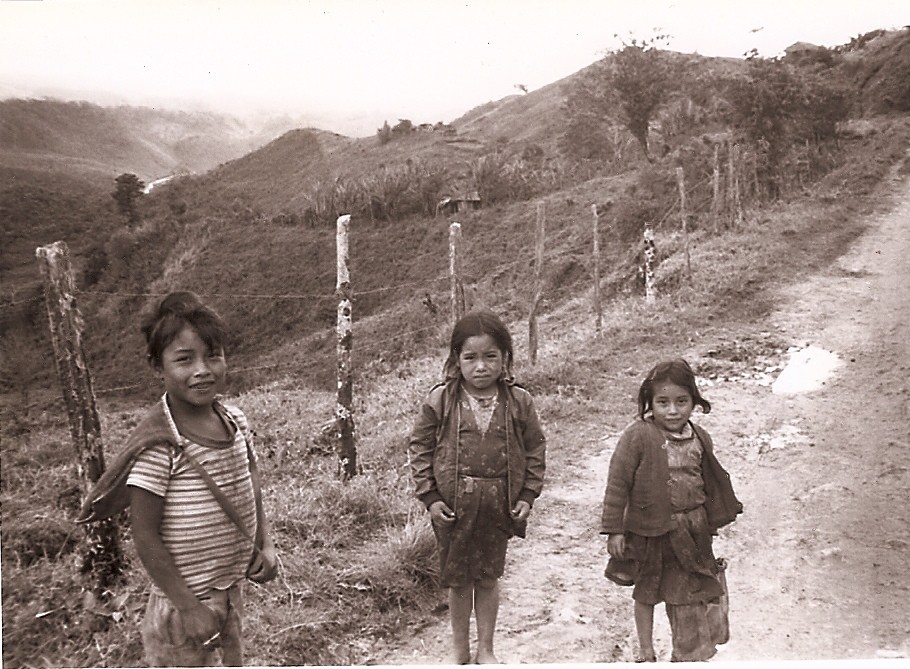
Some of the refugees we met in 1985, including the 3 children in my photo, came from the Guatemalan village of Yalambojoch. I planned to swing through there on my way back south to my teaching job. Following the advice of the folks in El Quetzal, I crossed the border at Gracias a Dios (“Thanks to God” — best town name ever), where I caught a bus and was soon in Yalambojoch.
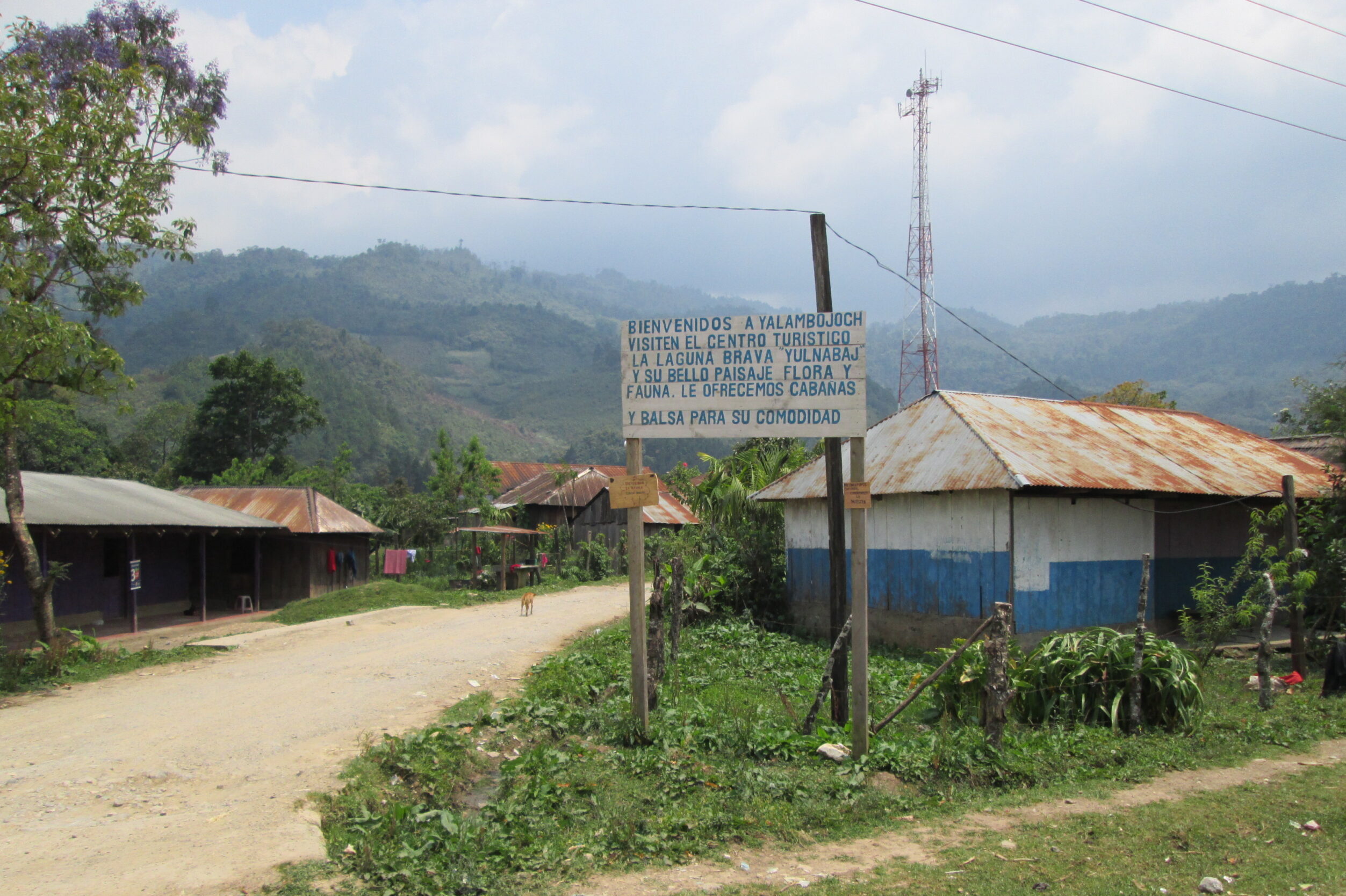
I was hoping to get information about the 3 children in my photo, and my method was to walk around the town showing the old photo to whomever I met. About the 6th person I spoke with said, while pointing at the photo, “That girl is my wife.” Bingo.
It turns out that all three children where siblings. All had survived their refugee years. I met the two girls (now women), but the boy was away working. I had made extra copies of the photo to give them, and they seemed thrilled since they had almost no photos from their childhood.
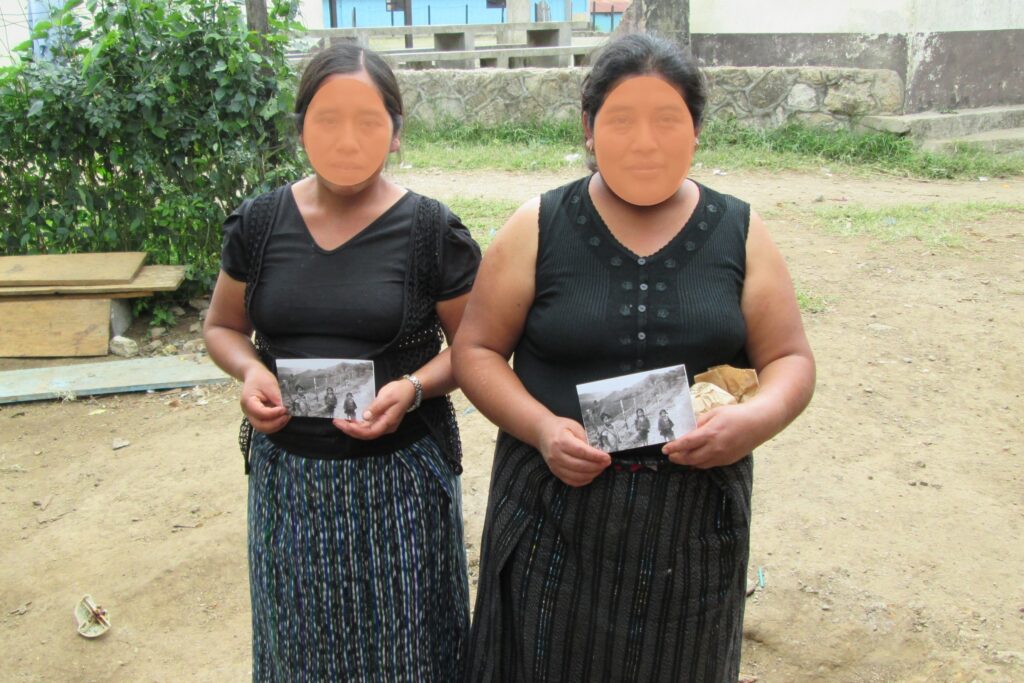
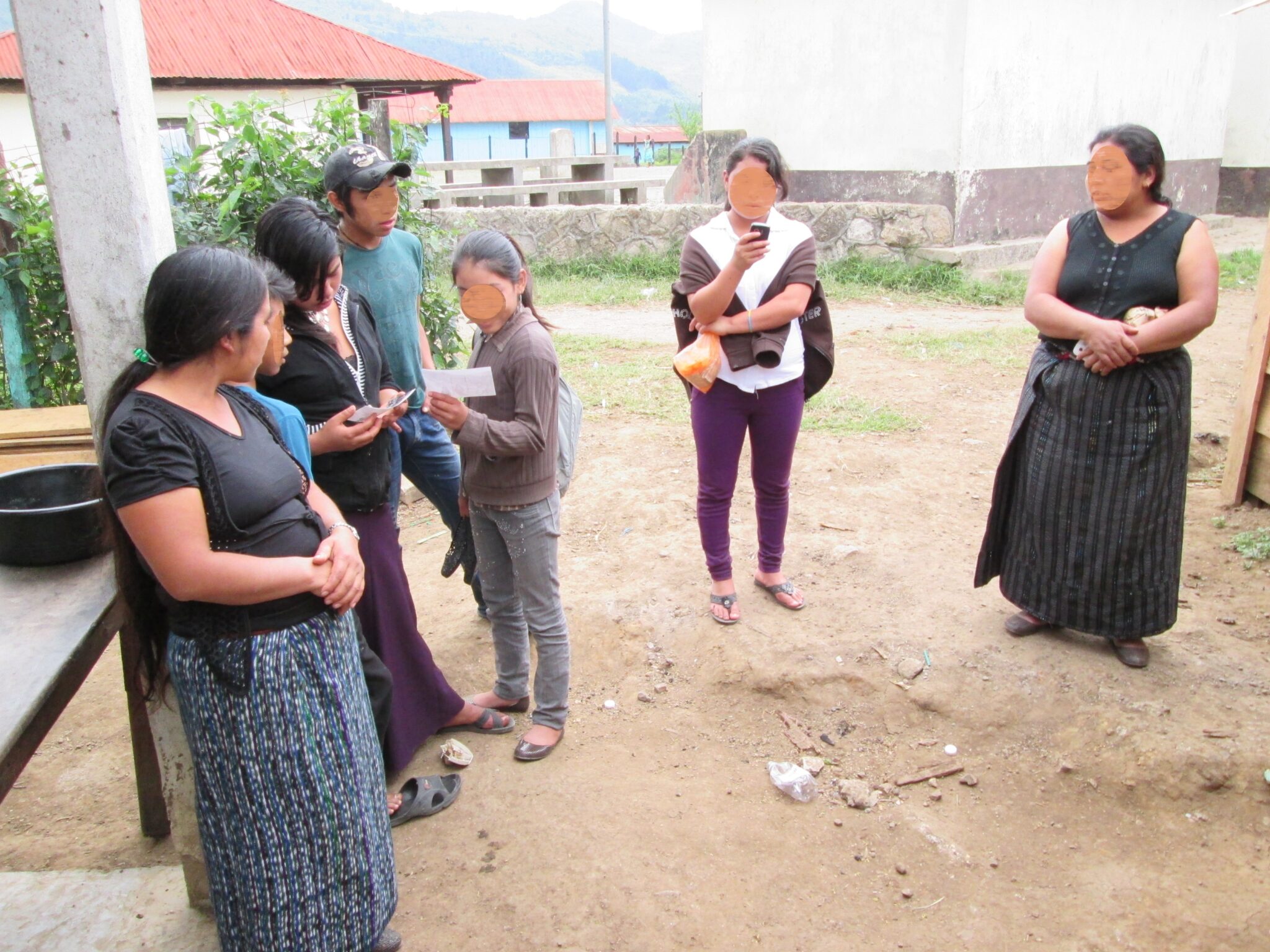
For good manners, I have obscured their faces in the 2014 photos. If I hadn’t, you would see that these two women are indeed the two little girls I met on the road in 1985.
Leaving Yalambojoch turned out to be another adventure. After waiting an hour for a bus going my way (and having no idea when one might come), I decided to ask around for a ride. I got one with a husband and wife who were traveling in a Toyota pickup loaded with their wares for a town fair. I rode in the back.
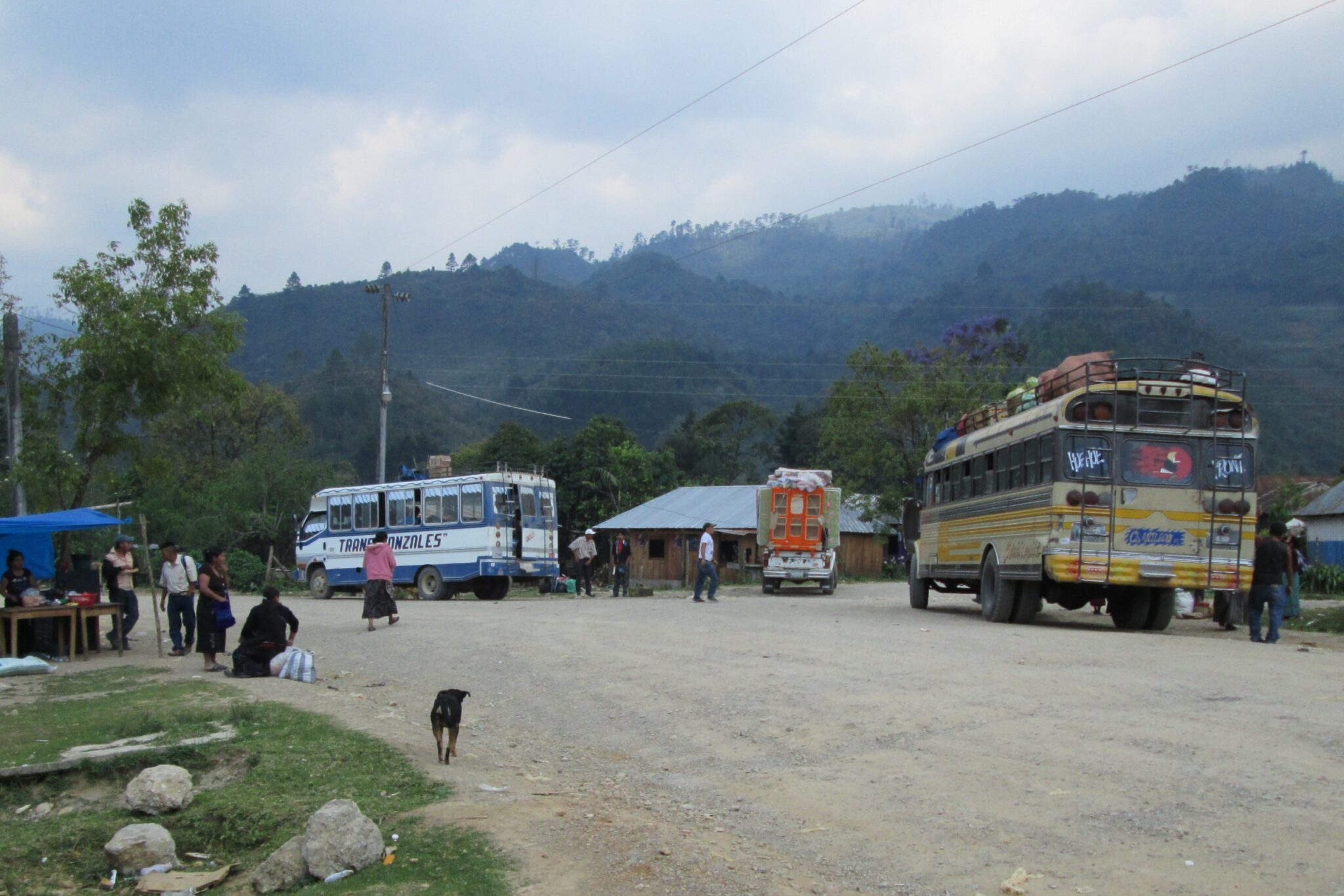
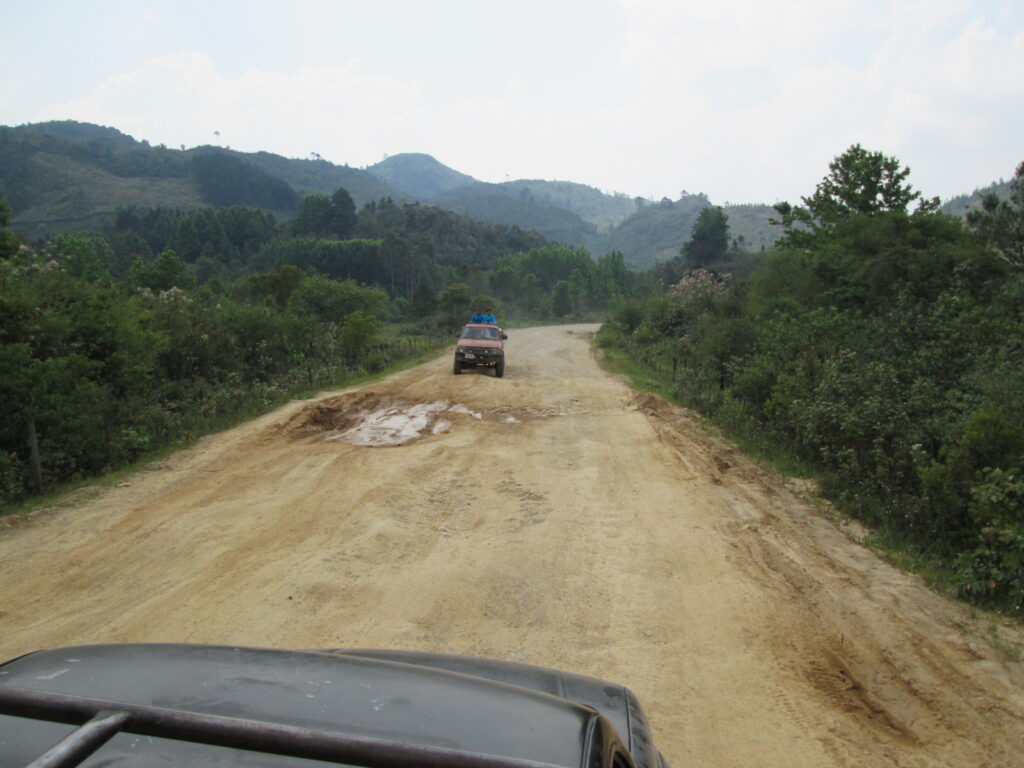
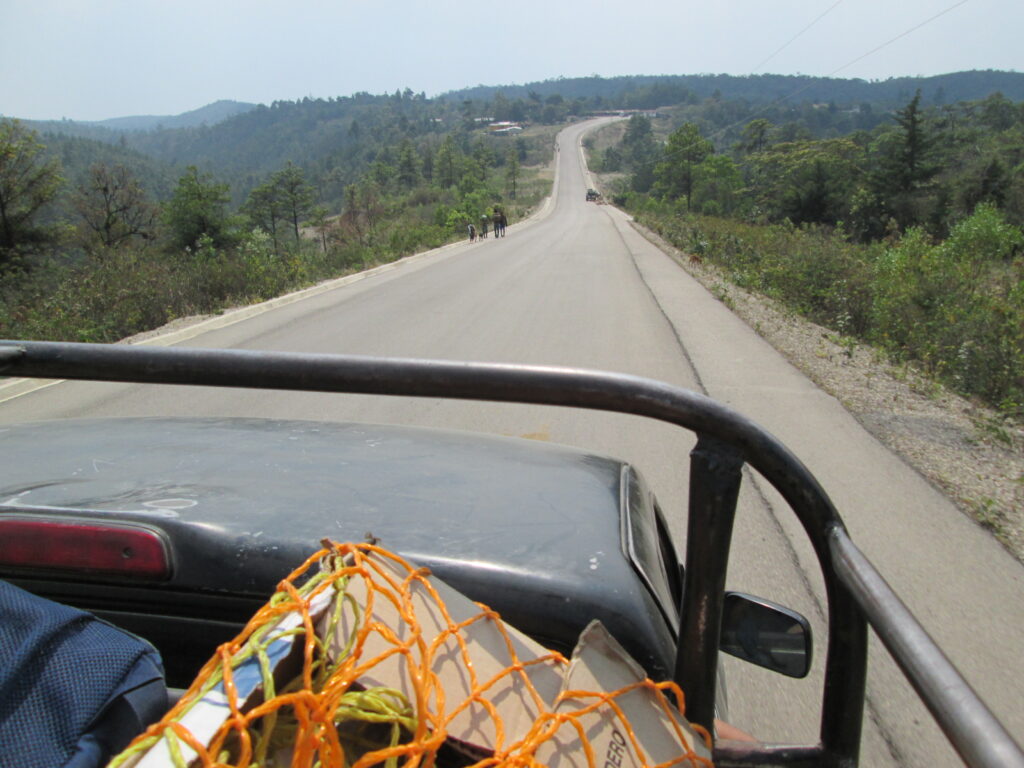
That day, I only made it halfway home. I stayed the night in the city of Huehuetenango and made it home the next day.
The trip was a success. I was relieved to learn that the children had survived their refugee experience; and I added another layer to my understanding of that corner of the world.