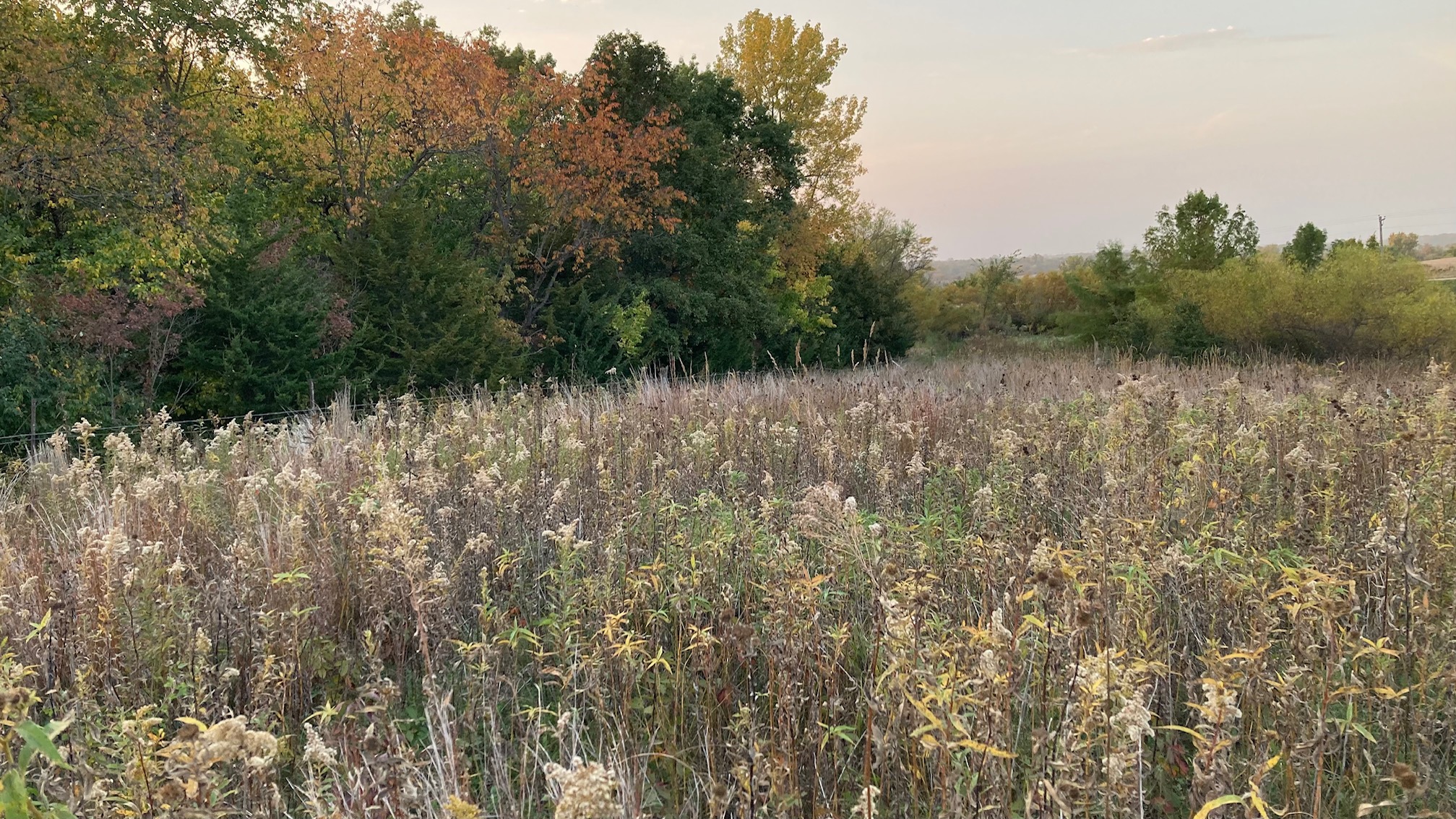
The Hillside Prairie is a project I’ve been working on for over 15 years — a little patch of land returned to the native plants that once grew there.
The Heart of the Prairie Region
My small farm is located in the heart of what was once the tall-grass prairie region. And even after 150 years of prairie-destroying agricultural practices, the hilly topography has allowed many prairie plants to persist, growing along roadsides and in out-the-way places.
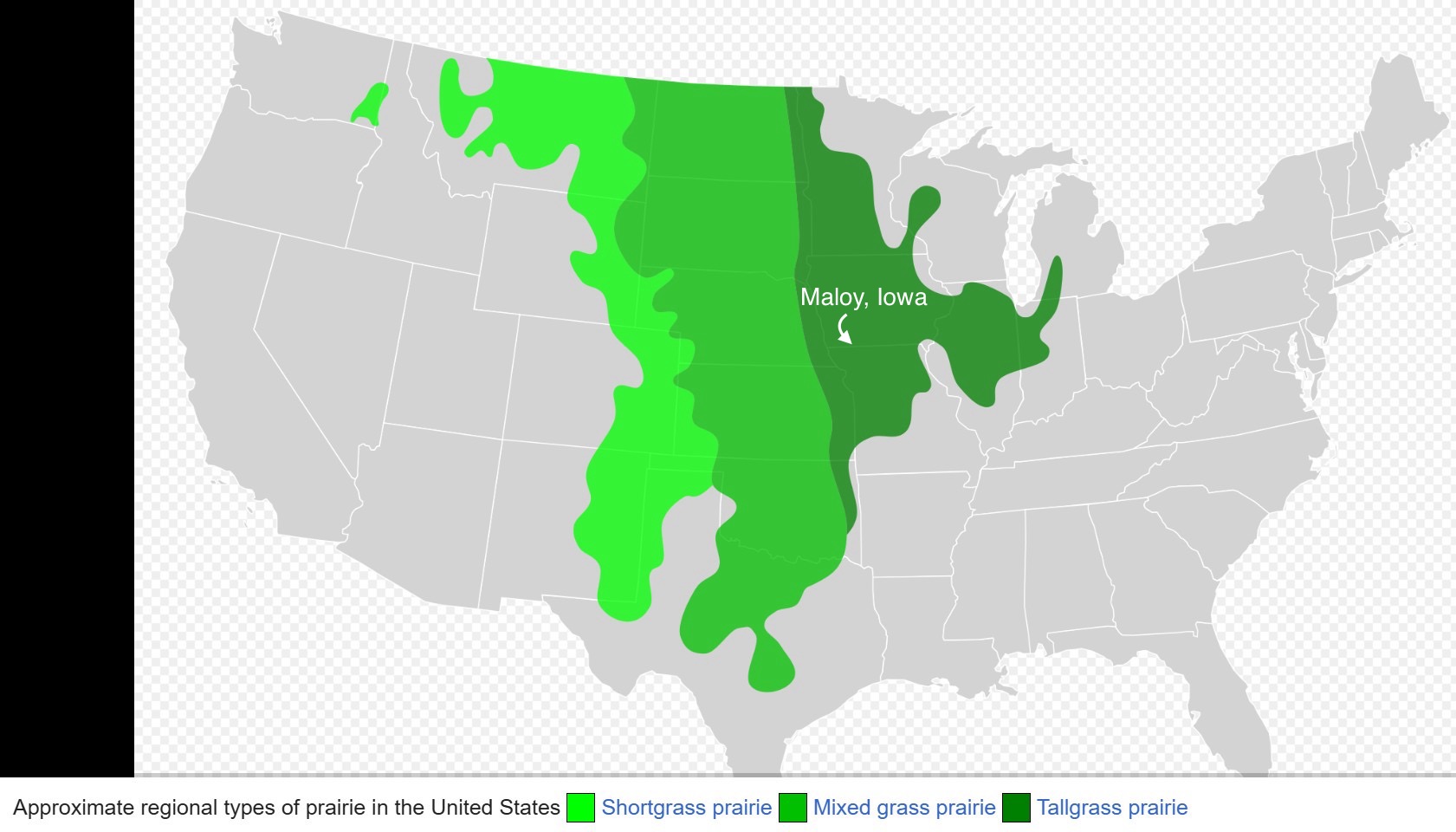
(By Theshibboleth/Howpper (small addition), CC BY-SA 4.0 https://creativecommons.org/licenses/by-sa/4.0, via Wikimedia Commons)
The Hillside Prairie — Situation and Inspiration
The Hillside Prairie is situated on a north-facing slope between the woods and the pond dam. This is an area that had been farmed for decades, been in conservation reserve for 13 years, and then in soybeans for 1 year.
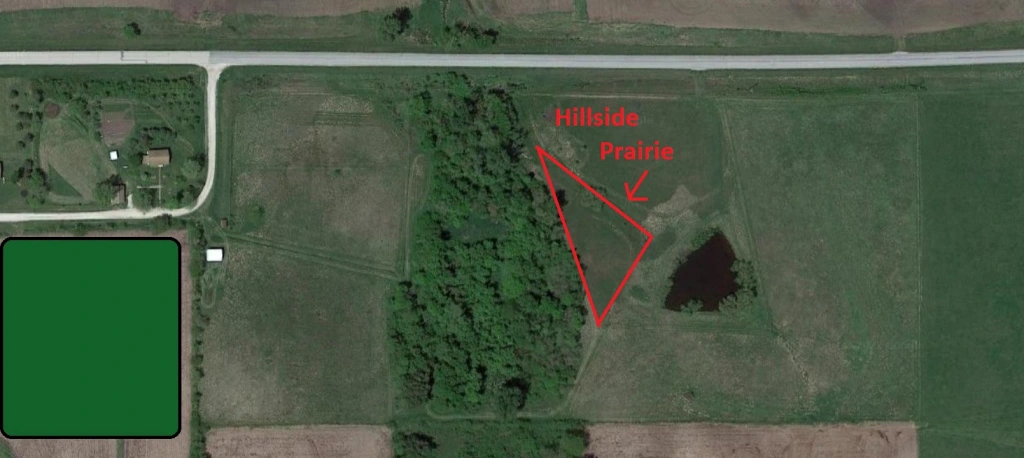
When I got the farm, I converted the cropland into sheep pasture. Over the next several years, I noticed that several prairie wildflowers were eking out a living in the eroded, extremely poor soil on the hillside land. Those super-resilient wildflowers inspired me to dedicate that half-acre to prairie, starting in 2009.
Plants that inspired:
Foundation Grasses
Grasses were the foundation of the prairie ecosystem, and those were lacking here. To remedy the situation, I collected seeds from a patch of little bluestem growing on a similar north-facing hillside (located northeast of Diagonal, Iowa). Some little bluestem plants were evident a year after seeding, and over the years a nice stand has developed. The little bluestem dominates the poorer soils on the slope. Where the ground is better and more level (at both the top and bottom of the slope) Indian grass and big bluestem have appeared on their own.
Native prairie grasses:
Adding More Color
I’ve made an effort to introduce some of the most well-known prairie wildflowers to the mix. These plants have all been collected in Ringgold County.
Wildflowers added:
Diversity
A major feature of prairies is the diversity of plants . Managing this plot of land as a prairie has allowed other plants to thrive and to add to the diversity. With sufficient seed sources in the area, these prairie plants seem to arrive on their own.
Volunteer wildflowers:
Maintenance
Ongoing practices that aid the prairie are necessary. These practices include well-timed mowing, controlled burns, and hand-pulling (or digging). In the early stages, tall weedy plants such as sweet clover, wild carrot, mares tail (horseweed), and giant ragweed must be controlled. These plants make it difficult for the prairie grasses and wildflowers to get established. Later, the biggest threat to a prairie is the inevitable invasion by trees. Cutting and/or digging out trees is important and effective. Also effective, and more dramatic, is the occasional controlled burn.
Early spring burn:
The Featured Photo
This photo appears at the top of the post, but it also provides a nice closing view. A prairie will have a different “look” at different times of year. The Hillside Prairie in winter shows the rusty, reddish brown of the dried grasses. In summer, the prairie looks mostly green, since the majority of the wildflowers are shorter than the clumps of prairie grass. In early fall, the tall, yellow goldenrods make their presence known. Later in the fall, as seen in the photo, the goldenrod flowers have dried down to fluffy, white, arching plumes, and the grasses are turning various shades of tan. It’s a look that goes well with the fall color of the woods next door.